
Japan Edition — The Token Game | 96 Seasonal Crypto Coins
Japan Edition
108 coins · 365 days · Solana
12
Permanent
96
Seasonal
108
Total
Permanent Collection

$GM
Good Morning Coin
Origin
GM was minted at dawn on the first day the 13 nations agreed to speak to one another. It is the oldest coin in The Stash and the only one that has never once traded below its mint price.
Lore
Legend holds that every time someone types 'gm' into the void of the internet, a single GM token materialises somewhere inside The Stash. The nations have never verified this claim, but the supply keeps rising every morning without explanation. Traders who hold GM through sunrise are said to carry a faint golden aura that makes their other positions slightly less catastrophic.
Utility
GM grants its holder a daily mood bonus inside the Token Game, nudging RNG outcomes fractionally upward during the first hour of each in-game cycle. It is also the only coin accepted as a greeting at the gates of Nation Solara.
✦ The morning always comes — the question is whether you were holding the right thing when it did.

$CBC
Coffee Before Crypto
Origin
Coffee Before Crypto was forged in the break room of Nation Grindhaus by a trader who lost forty percent of her portfolio before her first cup of coffee and vowed it would never happen again. The coin was her apology to herself.
Lore
CBC carries a peculiar enchantment: any trade executed while a CBC token sits in your active wallet is logged with a one-minute delay, giving the holder just enough time to reconsider. Three of the 13 nations have tried to ban it for 'interfering with market velocity.' All three repealed the ban within a week after their citizens' portfolios visibly improved. The Stash keeps a commemorative mug.
Utility
Holding CBC reduces impulsive-trade penalties in the Token Game by 15% and unlocks the 'Caffeinated Clarity' passive, which highlights overbought signals in neon orange.
✦ Patience is just caffeine in a slower container.

$OMC
One More Candle
Origin
One More Candle was born in the charting districts of Nation Vigil, where the lights never go off and the clocks were removed from the walls decades ago. A collective of sleepless analysts minted it as both a joke and a confession.
Lore
OMC is rumoured to feed on attention — the more traders stare at its chart, the more volatile it becomes. Historians of the Token Game note that every major OMC pump has occurred between 2 a.m. and 4 a.m. local Vigil time, always preceded by someone saying 'just one more candle and I'll sleep.' The coin has never once closed where anyone expected.
Utility
OMC extends your active session timer in the Token Game by one cycle each time you hold it, but also increases chart-noise variance by 10%, making it a double-edged blessing.
✦ The candle that keeps you up is the same one that burns the house down — mind the wax.

$BOAT
Based On A Tweet
Origin
Based On A Tweet was minted the afternoon a single post from an anonymous account caused three nations to simultaneously move their entire treasury reserves. The founding council called it 'a cautionary token.' The market called it 'a buying opportunity.'
Lore
BOAT has no whitepaper, no roadmap, and no official team — only a pinned post that reads 'probably nothing.' Despite this, it has outperformed every fundamentals-backed coin in The Stash at least once per seasonal cycle. Scholars argue endlessly about whether BOAT is a satire or a prophecy. The anonymous account has never posted again.
Utility
BOAT introduces a random 'viral event' modifier once per game cycle, capable of doubling or halving any coin's price for 24 in-game hours. Holding BOAT gives you advance warning of the event by exactly one candle.
✦ The signal and the noise are the same tweet — only the timestamp tells them apart.

$JATB
Just A Test Bro
Origin
Just A Test Bro was accidentally deployed to the mainnet of Nation Devnet when an engineer pushed to production instead of staging. Rather than roll it back, the council shrugged and listed it on every exchange.
Lore
JATB is technically still in beta. The smart contract contains seventeen unresolved TODO comments and one function named 'doTheThing()' whose purpose no living developer can explain. Auditors have reviewed it four times; each audit concludes with the phrase 'we recommend further testing.' The coin has never been further tested. It keeps working anyway.
Utility
JATB unlocks the 'Testnet Mode' in the Token Game, allowing one simulated trade per cycle with no real consequences — perfect for strategies you're not quite sure about yet.
✦ Everything in production was once a test someone forgot to clean up.

$NUJV
No Utility Just Vibes
Origin
No Utility Just Vibes was minted by the Vibe Council of Nation Aetheria purely as an experiment in whether a coin could survive on aesthetic alone. The experiment was supposed to last two weeks. That was three years ago.
Lore
NUJV has no staking mechanism, no governance rights, no burn schedule, and no roadmap beyond the words 'good vibes only' written in the genesis block. Financial analysts across all 13 nations have declared it worthless approximately 47 times. Each declaration was followed by a price rally. The Vibe Council has framed every analyst report and hung them in their lobby.
Utility
Holding NUJV applies a passive 'Vibe Check' to your portfolio — once per cycle, one random losing position is cosmetically relabelled 'a learning experience' and its loss is halved for morale scoring purposes.
✦ Utility is a story we tell coins. Some coins refuse to listen.
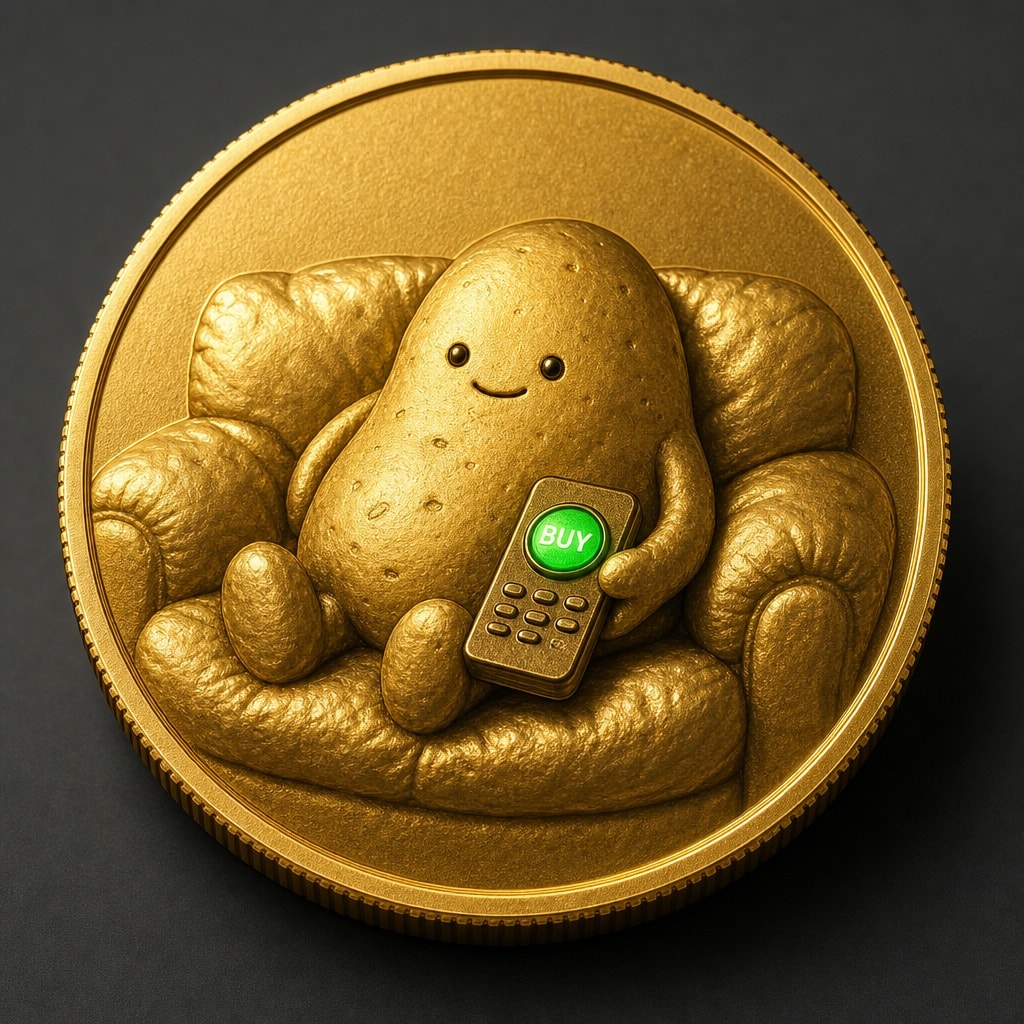
$LEHR
Low Effort High Reward
Origin
Low Effort High Reward was minted by Nation Lazara's treasury department as a hedge against their own citizens' work ethic. The whitepaper is two sentences long. The second sentence is 'you get it.'
Lore
LEHR is the only coin in The Stash whose price historically rises on public holidays, weekends, and any day where the majority of traders are clearly not paying attention. Economists call this the 'Lazara Paradox.' Nation Lazara calls it 'the whole point.' There is a statue of LEHR's founder in the capital; he is depicted napping.
Utility
LEHR generates passive yield in the Token Game during cycles where you make zero active trades, rewarding restraint and strategic inaction with a small but consistent return.
✦ The best trade is sometimes the one you were too comfortable to make.

$SFTD
Sorry For The Dip
Origin
Sorry For The Dip was created by a remorseful market maker in Nation Contraria who tanked the price of six coins in a single afternoon and felt genuinely bad about it. The coin was his apology. The market accepted it enthusiastically.
Lore
SFTD is the only coin that comes with an embedded apology in every transaction receipt. The message reads: 'We know. We're sorry. It'll probably go back up.' Historians note it usually does — SFTD has one of the highest post-dip recovery rates in The Stash, which has led some traders to deliberately buy the dip just to receive the apology, which they find comforting.
Utility
Holding SFTD activates a 'Dip Recovery' mechanic in the Token Game: after any position drops more than 20%, a partial rebound modifier is applied over the next three cycles.
✦ An apology is worth nothing — unless it comes with a recovery plan baked into the contract.

$WLN
Wen Lambo? Never.
Origin
Wen Lambo? Never. was minted as a direct response to the question that had haunted the Token Game's early traders for years. The founders decided the most honest answer deserved its own coin.
Lore
WLN carries a philosophical weight unusual for a memecoin. Its genesis block contains a single quote: 'The lambo was the friends we made along the way.' Nation Realist adopted it as legal tender for all transactions involving unrealistic expectations. Holding WLN is considered a sign of emotional maturity in trading circles, which has somehow made it extremely popular with people who are not emotionally mature.
Utility
WLN reduces FOMO-triggered trade penalties in the Token Game and unlocks the 'Tempered Expectations' badge, which grants a small XP bonus for every cycle you end without chasing a pump.
✦ The lambo is a destination. The Stash is the journey. Only one of them is real.

$RIP
Refund In Progress
Origin
Refund In Progress was minted by Nation Escrow's consumer protection bureau after the third major rug pull of the Token Game's second season. It was intended as a victim compensation mechanism. It became a speculative asset within 48 hours.
Lore
RIP exists in a permanent state of processing. Every transaction receipt says 'refund pending' regardless of whether a refund is actually pending. Traders have reported finding RIP tokens in their wallets with no record of purchase, which the Nation Escrow bureau describes as 'a known issue under investigation.' The investigation has been ongoing for two years. Progress is pending.
Utility
Holding RIP provides a one-time insurance payout in the Token Game if your portfolio drops more than 50% in a single cycle, returning 10% of losses as RIP tokens — which are themselves volatile, naturally.
✦ Every refund is a promise. The question is whether the promise is denominated in something real.

$ELE
Exit Liquidity Enjoyer
Origin
Exit Liquidity Enjoyer was minted anonymously and listed without warning on the final day of the Token Game's most chaotic season. No one knows who created it. Everyone suspects everyone else.
Lore
ELE is the coin that other coins warn their holders about. It has been described as 'the apex predator of the memecoin ecosystem' and 'a mirror held up to the market's face.' Strangely, knowing you might be the exit liquidity has never stopped anyone from buying ELE. If anything, the transparency seems to make it more appealing. The Stash archivists have stopped trying to explain this.
Utility
ELE grants access to the 'Late Entry Bonus' mechanic in the Token Game — a high-risk, high-reward modifier that pays out generously if you exit before the cycle ends, and pays out nothing if you don't.
✦ The exit liquidity always thinks it is the smart money — right up until the moment it isn't.

$RPOP
Rug Pull? Or Pull-Up?
Origin
Rug Pull? Or Pull-Up? was minted by Nation Ambigua's department of financial ambiguity as a test of market sentiment. The coin's price chart is, by design, indistinguishable from both a rug pull and a recovery. This was intentional.
Lore
RPOP has been declared a rug pull 23 times and a legitimate comeback story 23 times. Both declarations have been correct simultaneously on at least four occasions, which Nation Ambigua considers a great success. The coin's mascot is a figure that is either falling or jumping, depending on which way you tilt your screen. Philosophers have written papers. Traders have lost sleep.
Utility
RPOP introduces a 'Conviction Check' mechanic in the Token Game — holding through a simulated 40% drop unlocks a multiplier, but selling early locks in the loss permanently. It rewards patience and punishes panic in equal measure.
✦ The rug and the rocket use the same cord — only the direction of the pull differs.
Seasonal Coins
January
8 coins
$OSHOGATSU
Oshogatsu
Origin
OSHOGATSU was minted by Nation Torii's New Year exchange on the stroke of midnight, January 1, when the temple bells rang 108 times to purge the 108 human desires and The Stash's purification oracle registered a full reset of all outstanding debts, grudges, and losing positions. The exchange minted it as the coin of the most important three days in the Japanese calendar.
Lore
OSHOGATSU is the Token Game's most ceremonially reset coin. The New Year in Japan means osechi ryori in lacquered jubako boxes, kadomatsu pine arrangements at the door, and the quiet understanding that the old year's losses do not follow you into the new one — a mechanic The Stash calls the 'clean slate protocol,' where all OSHOGATSU positions begin January 1 with a zero-loss floor.
Utility
OSHOGATSU activates a zero-loss floor for the first three days of the January cycle, absorbing any negative returns into The Stash's New Year reserve — because the first three days of Oshogatsu are protected time, and the coin was designed to honour that. After day three, normal volatility resumes.
✦ The bells have rung 108 times. Your debts are cleared. Do not bring last year's losses into the new year.

$HATSUMODE
Hatsumode
Origin
HATSUMODE was minted by Nation Torii's shrine-visit exchange on January 2, when three million people queued at Meiji Jingu in the cold Tokyo dawn and The Stash's pilgrimage oracle registered the highest simultaneous intention-setting event in Token Game history. The exchange minted it as the coin of the first prayer of the year.
Lore
HATSUMODE is the Token Game's most intention-amplifying January coin. The first shrine visit of the New Year — the omamori charm purchased, the ema wish-plaque hung, the two bows and two claps before the offering box — carries in The Stash a 'first-prayer mechanic' where the first trade made while holding HATSUMODE sets the directional bias for all subsequent January positions, because the first prayer of the year is the one that matters most.
Utility
HATSUMODE amplifies the directional signal of the first trade placed during the January cycle — if the first trade wins, all subsequent January positions receive a positive bias modifier; if it loses, the shrine absorbs the loss and resets the counter. The coin rewards those who make their first move with intention.
✦ Two bows. Two claps. One prayer. Make your first trade count — the shrine is listening.

$OMAMORI
Omamori
Origin
OMAMORI was minted by Nation Torii's shrine exchange when the oracle observed that Japan had invented a small brocade pouch containing a prayer and sold it as a portable luck delivery system, and that this was, structurally, identical to a financial instrument, and that the Token Game should acknowledge this convergence. The exchange minted it as the coin of the most honest lucky charm in the world.
Lore
OMAMORI is the Token Game's most spiritually diversified November coin — its yield is calculated by The Stash's charm oracle, which has observed that omamori are available for love, traffic safety, academic success, and business prosperity, and that a holder who carries all four has assembled the most comprehensive protection portfolio in the Token Game.
Utility
OMAMORI provides a 'shrine blessing' yield bonus when held alongside any shrine or temple coin — the assembled position activates The Stash's protection oracle and rewards holders who understood that luck, like yield, is not random but the result of visiting the right shrine at the right time with the right coin.
✦ The omamori has been purchased. The oracle has blessed the position. Do not open the pouch to see what is inside. The yield depends on it.

$KAKIZOME
Kakizome
Origin
KAKIZOME was minted by Nation Torii's calligraphy exchange on January 2, when the first brush strokes of the New Year were made on washi paper and The Stash's intention oracle registered the most auspicious character combinations written simultaneously across Japan — 夢 (dream), 福 (fortune), 愛 (love) — and declared the year's directional theme. The exchange minted it as the coin of the first written word.
Lore
KAKIZOME is the Token Game's most intentionally directional January coin. The kakizome — the first calligraphy of the New Year, written on January 2 with a brush dipped in fresh ink, the character chosen to set the year's intention — carries in The Stash a 'written intention mechanic' where the character a trader inscribes at position-open determines the coin's yield pathway: 夢 for growth, 福 for stability, 愛 for correlation bonuses.
Utility
KAKIZOME requires traders to select one of three kanji at position open — 夢 (growth path), 福 (stability path), or 愛 (correlation path) — and the coin's yield mechanics shift accordingly for the entire January cycle. The choice cannot be changed, because the kakizome is burned at the end of January in the dondo-yaki bonfire, and what is written is written.
✦ Choose your character carefully. The brush does not lie. The coin does not forget.

$OTOSHIDAMA
Otoshidama
Origin
OTOSHIDAMA was minted by Nation Torii's gift-envelope exchange on January 1, when the children of Japan woke up to find decorated pochibukuro envelopes under the New Year altar and The Stash's windfall oracle registered the highest simultaneous joy-reading among under-twelves in Token Game history. The exchange minted it as the coin of the most anticipated moment of the Japanese New Year.
Lore
OTOSHIDAMA is the Token Game's most joyfully random January coin. The otoshidama — the New Year money gift given by relatives in decorated envelopes, the amount unknown until the envelope is opened — carries in The Stash a 'mystery envelope mechanic' where each OTOSHIDAMA position contains a randomised yield multiplier between 1x and 13x, one for each of the 13 nations, revealed only at the moment of opening.
Utility
OTOSHIDAMA positions cannot be valued before opening — the yield is sealed inside the envelope. Traders must open the position to discover the multiplier, and once opened, the position must be held for exactly one day before settlement. The coin rewards the children at heart who open with excitement, not the analysts who try to weigh the envelope.
✦ Do not shake the envelope. Do not hold it up to the light. Open it with both hands and say thank you.

$KAGAMIMOCHI
Kagami Mochi
Origin
KAGAMIMOCHI was minted by Nation Torii's rice-cake exchange on January 1, when the two-tiered mochi tower was placed on the household altar with a daidai bitter orange on top and The Stash's offering oracle registered the most structurally stable stacking formation in Token Game history. The exchange minted it as the coin of the New Year's sacred display.
Lore
KAGAMIMOCHI is the Token Game's most structurally stable January coin. The kagamimochi — two round mochi stacked large-over-small, topped with a bitter orange whose name means 'generation to generation' — carries in The Stash a 'tiered stability mechanic' where KAGAMIMOCHI positions cannot be liquidated until January 11, the day of Kagami Biraki when the mochi is ceremonially broken and shared. You display it; you do not eat it early.
Utility
KAGAMIMOCHI locks positions from liquidation until January 11 in exchange for a guaranteed minimum return — the coin of the patient display, not the impatient trade. On January 11, the Kagami Biraki unlock event releases all positions simultaneously with a bonus yield, because the mochi broken together is sweeter than the mochi broken alone.
✦ Do not break it early. The bitter orange sits on top for a reason. Wait for January 11.

$OZONI
Ozoni
Origin
OZONI was minted by Nation Torii's New Year soup exchange on January 1, when the first bowl of the year was served and The Stash's regional-variation oracle registered seventeen distinct mochi shapes, forty-three distinct broths, and one universal truth: the ozoni of your childhood is the only correct ozoni. The exchange minted it as the coin of the most argued-about soup in Japan.
Lore
OZONI is the Token Game's most regionally variable January coin. The ozoni — the New Year soup with mochi, served as the first meal of the year, its recipe varying from Tokyo's clear dashi with square mochi to Kyoto's white miso with round mochi to Kagawa's anko-filled mochi in sweet broth — carries in The Stash a 'regional variation mechanic' where yield differs by the nation of origin, because every region is correct and every region is different.
Utility
OZONI yield is calculated using the trader's registered nation in The Stash — each of the 13 nations has a distinct OZONI yield formula reflecting its regional broth style, from the clear-dashi high-volatility formula of Nation Torii to the white-miso low-volatility formula of Nation Kyo. Traders who have never registered a nation receive the 'mystery regional' formula, which is delicious but unpredictable.
✦ Your mother's ozoni is correct. So is your grandmother's. The coin holds both truths simultaneously.

$FUKUBUKURO
Fukubukuro
Origin
FUKUBUKURO was minted by Nation Torii's lucky-bag exchange on January 1, when the department stores of Japan opened their doors at dawn and the queues stretched around the block for mystery bags worth more than their price and The Stash's bargain oracle registered the highest value-to-cost ratio in Token Game history. The exchange minted it as the coin of the New Year's greatest retail gamble.
Lore
FUKUBUKURO is the Token Game's most mysteriously valued January coin. The fukubukuro — the lucky bag sold by Japanese shops on New Year's Day, its contents sealed and unknown, its value guaranteed to exceed the purchase price — carries in The Stash a 'sealed bag mechanic' where FUKUBUKURO positions always contain more value than their entry cost, but the composition of that value is unknown until the seasonal cycle closes.
Utility
FUKUBUKURO guarantees a positive return for all positions opened on January 1 — the contents of the lucky bag always exceed the price — but the form of that return (yield, bonus tokens, cross-nation correlation credits, or Stash reputation points) is randomised and revealed only at cycle close. The coin is for traders who love a bargain and can tolerate not knowing exactly what they bought.
✦ The bag is heavier than it looks. The contents are better than you expect. Stop trying to peek inside.
February
8 coins
$SETSUBUN
Setsubun
Origin
SETSUBUN was minted by Nation Torii's seasonal-boundary exchange on February 3, the day before the traditional start of spring, when the line between the old season and the new is thinnest and The Stash's liminal oracle registered the highest demon-traffic reading in Token Game history. The exchange minted it as the coin of the boundary between winter and spring.
Lore
SETSUBUN is the Token Game's most boundary-crossing February coin. Setsubun — the bean-throwing festival on February 3 that marks the eve of spring, when demons are driven out and fortune is invited in — carries in The Stash a 'seasonal boundary mechanic' where SETSUBUN positions straddle the January and February cycles simultaneously, capturing yield from both sides of the seasonal divide.
Utility
SETSUBUN positions earn yield from both the closing January cycle and the opening February cycle simultaneously for a 48-hour window around February 3 — the only coin in The Stash that earns across two seasonal cycles at once. After the boundary window closes, the position settles to the February cycle exclusively, because the demons have been driven out and the new season has begun.
✦ The boundary is open for 48 hours. Step through it. The demons cannot follow you into the new season.

$MAMEMAKI
Mame Maki
Origin
MAMEMAKI was minted by Nation Torii's bean-throwing exchange on February 3, when the roasted soybeans were hurled at the oni masks with the cry of 'Oni wa soto! Fuku wa uchi!' and The Stash's expulsion oracle registered the highest simultaneous demon-removal event in Token Game history. The exchange minted it as the coin of the ritual shout.
Lore
MAMEMAKI is the Token Game's most aggressively purifying February coin. The mamemaki — the Setsubun bean-throwing ritual, roasted soybeans flung at demons with the chant 'Demons out! Fortune in!' — carries in The Stash an 'expulsion mechanic' where MAMEMAKI positions actively eject the lowest-performing coin from a trader's portfolio, replacing it with a fortune-weighted random selection from The Stash's February catalogue.
Utility
MAMEMAKI automatically identifies and closes the worst-performing position in a trader's portfolio at the moment of activation on February 3, replacing it with a randomly selected February coin weighted toward positive seasonal momentum — because the bean-throwing is not gentle, and the coin was designed to do the same thing to a portfolio that is carrying dead weight.
✦ Oni wa soto. Fuku wa uchi. The worst position goes. Something better takes its place. Throw the beans.

$ONI
Oni
Origin
ONI was minted by Nation Torii's supernatural exchange on February 3, when the red and blue demon masks were strapped on by the fathers of Japan and the children screamed with genuine terror and The Stash's fear oracle registered the highest adrenaline-reading in Token Game history. The exchange minted it as the coin of the most feared supernatural being in Japanese folklore.
Lore
ONI is the Token Game's most volatilely terrifying February coin. The oni — the horned, club-wielding demon of Japanese folklore, red with rage or blue with cold, driven away each Setsubun but always returning — carries in The Stash a 'demon volatility mechanic' where ONI positions exhibit extreme price swings, because the oni is not predictable and the coin was designed to reflect that terrifying truth.
Utility
ONI positions swing between -50% and +200% during the February cycle with no intermediate states — the coin either terrorises the portfolio or rewards the brave trader who did not run when the demon appeared at the door. Holding ONI through a full Setsubun cycle without closing the position grants the 'Oni Tamer' achievement and a permanent volatility resistance bonus.
✦ The children are screaming. The father is wearing the mask. The coin is watching. Do not run.

$EHOMAKI
Ehomaki
Origin
EHOMAKI was minted by Nation Torii's directional-eating exchange on February 3, when the lucky-direction sushi rolls were eaten in complete silence while facing the year's auspicious compass bearing and The Stash's orientation oracle registered the most precisely directional eating event in Token Game history. The exchange minted it as the coin of the lucky direction.
Lore
EHOMAKI is the Token Game's most directionally precise February coin. The ehomaki — the thick, uncut sushi roll eaten in silence on Setsubun while facing the year's lucky compass direction, no speaking allowed until the roll is finished — carries in The Stash a 'lucky direction mechanic' where EHOMAKI yield is maximised only when positions are opened while facing the year's designated lucky nation in The Stash's 13-nation compass.
Utility
EHOMAKI yield is multiplied when positions are opened in the direction of the year's lucky nation — determined by The Stash's annual compass reading published on January 1 — and reduced when opened facing the unlucky nation. Traders who speak (close the position early) before the roll is finished forfeit the directional bonus, because the ehomaki is eaten in silence and the coin demands the same discipline.
✦ Check the compass. Face the lucky nation. Do not speak until the roll is finished. Do not cut it.

$VALENTINES3
Valentines 3
Origin
VALENTINES3 was minted by Nation Torii's chocolate exchange on February 14, when the department store basement confectionery floors of Japan were transformed into temples of obligation and affection and The Stash's sentiment oracle registered the most complex simultaneous emotional transaction in Token Game history — duty and love, wrapped in the same foil. The exchange minted it as the coin of Japan's uniquely gendered chocolate ritual.
Lore
VALENTINES3 is the Token Game's most socially stratified February coin. Valentine's Day in Japan — where women give chocolate to men, navigating the treacherous distinction between giri choco (obligation) and honmei choco (true feelings) — carries in The Stash a 'chocolate stratification mechanic' where VALENTINES3 positions are classified at open as either giri (low-yield, low-risk, mandatory) or honmei (high-yield, high-risk, voluntary).
Utility
VALENTINES3 requires traders to declare their position type at open — giri (obligation, guaranteed small return, no emotional exposure) or honmei (true feelings, high potential return, risk of complete loss if unrequited) — and the yield mechanics differ dramatically. The giri position always returns something; the honmei position returns everything or nothing, because that is the nature of true feelings.
✦ The department store basement is crowded. The foil is beautiful. Choose: obligation or true feelings. Choose carefully.

$HONMEI
Honmei Choco
Origin
HONMEI was minted by Nation Torii's true-feelings exchange on February 14, when the handmade chocolate was wrapped in careful paper and given with shaking hands and The Stash's sincerity oracle registered the highest emotional-stakes transaction in Token Game history. The exchange minted it as the coin of the chocolate that means something.
Lore
HONMEI is the Token Game's most emotionally volatile February coin. Honmei choco — the heartfelt Valentine's chocolate given to a true love, often handmade with hours of effort, representing genuine romantic intention — carries in The Stash a 'true feelings mechanic' where HONMEI positions are either returned with interest on White Day (March 14) or lost entirely, because unrequited feelings do not compound.
Utility
HONMEI positions are held in escrow from February 14 to March 14 — White Day — when the recipient either returns the position with a 3x multiplier (reciprocated) or the position expires worthless (unrequited). The coin cannot be sold before White Day, because you cannot take back honmei choco once it has been given.
✦ You made it by hand. You wrapped it carefully. Now you wait until March 14. The coin knows how you feel.

$GIRI
Giri Choco
Origin
GIRI was minted by Nation Torii's obligation exchange on February 14, when the office ladies of Japan distributed chocolate to every male colleague with the resigned efficiency of a tax filing and The Stash's duty oracle registered the highest volume of joyless-but-necessary transactions in Token Game history. The exchange minted it as the coin of social obligation.
Lore
GIRI is the Token Game's most obligatorily reliable February coin. Giri choco — the obligation chocolate given to male colleagues and bosses on Valentine's Day, purchased in bulk, wrapped identically, distributed without eye contact — carries in The Stash a 'social obligation mechanic' where GIRI positions always yield a small, predictable return regardless of market conditions, because obligation is not exciting but it is dependable.
Utility
GIRI delivers a flat, guaranteed 3% return during the February cycle regardless of volatility, market direction, or seasonal disruption — the most boring coin in The Stash and also the most reliable. Traders who hold only GIRI are judged by the other 12 nations as lacking ambition, but their portfolios never lose money in February.
✦ It is not exciting. It is not heartfelt. It is chocolate in a plain box, and it will be there on White Day. That is enough.

$TOMO
Tomo Choco
March
8 coins
$HINAMATSURI
Hinamatsuri
Origin
HINAMATSURI was minted by Nation Torii's Girls' Day exchange on March 3, when the hina doll platforms were illuminated with paper lanterns and the chirashizushi and hishi mochi were served and The Stash's celebration oracle registered the most elegantly feminine seasonal event in Token Game history. The exchange minted it as the coin of the day that belongs to the daughters of Japan.
Lore
HINAMATSURI is the Token Game's most elegantly tiered March coin. Hinamatsuri — Girls' Day on March 3, the display of imperial court dolls on a seven-tiered platform, the eating of hishi mochi in pink, white, and green, the drinking of amazake — carries in The Stash a 'seven-tier mechanic' where yield compounds across seven levels, each tier adding to the one below, because the hina platform is built from the bottom up and so is the return.
Utility
HINAMATSURI yield compounds across seven tiers during the March cycle — each day held adds one tier of compounding, with the full seven-tier return unlocked only after seven consecutive days. Positions closed before day seven receive only the tiers accumulated, because the hina display must be put away by March 4 or the daughter will be late to marry, and the coin enforces the same deadline.
✦ Seven tiers. Seven days. Put it away on March 4. The coin is a daughter's coin — treat it with care.

$HINA
Hina Doll
Origin
HINA was minted by Nation Torii's doll-display exchange in late February, when the hina ningyo were carefully unwrapped from their tissue paper and arranged on the seven-tiered platform and The Stash's preparation oracle registered the most meticulous seasonal setup in Token Game history. The exchange minted it as the coin of the careful preparation for Girls' Day.
Lore
HINA is the Token Game's most carefully arranged February coin. The hina doll display — the imperial court in miniature, the Emperor and Empress on the top tier, the ladies-in-waiting below, the musicians below them, the guards at the base — carries in The Stash a 'tiered arrangement mechanic' where HINA positions must be assembled in the correct hierarchical order to activate full yield, because the dolls arranged incorrectly bring bad luck and the coin was designed to enforce the same discipline.
Utility
HINA requires traders to open positions in the correct seasonal sequence — HINA before HINAMATSURI, HINAMATSURI before PEACHBLOSSOM — to unlock the full tiered yield. Positions opened out of sequence yield only the base rate, because the hina display assembled in the wrong order is an inauspicious display, and The Stash's oracle will not reward carelessness.
✦ The Emperor and Empress go on the top tier. Always. The coin is watching the arrangement.

$PEACHBLOSSOM
Peach Blossom
Origin
PEACHBLOSSOM was minted by Nation Torii's floral exchange on March 3, when the momo no hana branches were placed beside the hina doll display and The Stash's botanical oracle registered the most symbolically loaded flower arrangement in Token Game history — peach blossoms representing feminine beauty, longevity, and the warding off of evil spirits. The exchange minted it as the coin of Hinamatsuri's sacred flower.
Lore
PEACHBLOSSOM is the Token Game's most symbolically protective March coin. The peach blossom — the flower of Hinamatsuri, the momo no hana placed beside the hina dolls to symbolise feminine beauty and happiness and the repelling of misfortune — carries in The Stash a 'protective bloom mechanic' where PEACHBLOSSOM positions shield adjacent coins from negative seasonal events during the March cycle.
Utility
PEACHBLOSSOM acts as a portfolio shield during the March cycle — any coin held alongside PEACHBLOSSOM is protected from one negative seasonal event per cycle, the misfortune absorbed by the peach blossom's protective symbolism. The shield is single-use per cycle, because the peach blossom blooms once and its protection, once spent, must wait for the next spring.
✦ Place it beside the display. It is not the most dramatic coin. It is the one that keeps the bad luck away.

$WHITEDAY
White Day
Origin
WHITEDAY was minted by Nation Torii's reciprocation exchange on March 14, when the men of Japan returned the Valentine's Day favour with white chocolate, marshmallows, and gifts three times the value of what they received and The Stash's reciprocity oracle registered the most precisely calculated return-on-affection in Token Game history. The exchange minted it as the coin of the obligatory reply.
Lore
WHITEDAY is the Token Game's most precisely reciprocal March coin. White Day — the Japanese invention of March 14, when men return Valentine's gifts to women with white chocolate and the unspoken rule that the return gift must be worth three times the original — carries in The Stash a 'sanbai gaeshi mechanic' (triple return) where WHITEDAY positions automatically triple the yield of any HONMEI or GIRI position held since February 14.
Utility
WHITEDAY settles all outstanding HONMEI and GIRI positions from February 14 with a 3x multiplier on White Day — the sanbai gaeshi rule encoded directly into the coin's settlement logic. Traders who did not hold HONMEI or GIRI in February receive only the base WHITEDAY return, because you cannot return what was never given.
✦ Three times the value. That is the rule. The coin does not negotiate the sanbai gaeshi.

$MARSHMALLOW
Marshmallow

$SAKURA
Sakura
Origin
SAKURA was minted by Nation Torii's floral exchange in late March, when the Japan Meteorological Corporation issued the first sakura forecast of the year and The Stash's bloom oracle registered the most anticipated botanical event in Token Game history — a nation holding its breath for two weeks of pink. The exchange minted it as the coin of Japan's most beloved flower.
Lore
SAKURA is the Token Game's most ephemerally beautiful March coin. The sakura — the cherry blossom, blooming for just two weeks each spring before the petals fall in the wind like pink snow — carries in The Stash a 'mono no aware mechanic,' the Japanese concept of the bittersweet beauty of impermanence, where SAKURA positions yield their maximum return only in the brief window of peak bloom and decline rapidly after.
Utility
SAKURA yield peaks during a 14-day window in the March-April cycle and declines by 10% each day after peak bloom — the coin of the two-week window, rewarding traders who time the bloom and exit before the petals fall. Positions held past the bloom window lose value as the blossoms scatter, because the sakura is most beautiful when it is falling and most valuable when it is full.
✦ Two weeks. That is all you get. The petals are already falling. Have you opened your position?

$HANAMI
Hanami
Origin
HANAMI was minted by Nation Torii's picnic exchange in late March, when the blue tarps were spread under the sakura trees at dawn by the most junior office worker and the bento boxes were opened and the sake was poured and The Stash's communal-joy oracle registered the highest simultaneous outdoor happiness reading in Token Game history. The exchange minted it as the coin of the cherry blossom picnic.
Lore
HANAMI is the Token Game's most communally yielding March coin. Hanami — the cherry blossom viewing party, blue tarps under blooming sakura, bento boxes and canned beer and the specific joy of eating outside in the cold spring air — carries in The Stash a 'group picnic mechanic' where HANAMI yield increases with the number of traders holding the coin simultaneously, because hanami is not a solo activity and the coin was designed to reward the group.
Utility
HANAMI yield scales with the number of simultaneous holders during the March-April cycle — the more traders picnicking together under the sakura, the higher the return for all of them. Solo HANAMI positions yield the base rate; a group of 13 or more (one per nation) unlocks the 'Full Blossom' bonus, because the best hanami is the one where everyone shows up.
✦ Spread the tarp. Open the bento. The coin is better when shared. Invite the other nations.

$BENTO
Bento
Origin
BENTO was minted by Nation Torii's culinary exchange on a train platform, when a traveller opened a lacquered box and revealed a compartmentalised perfection of rice, tamagoyaki, pickled plum, and three pieces of karaage arranged with a care that exceeded the requirements of the situation. The exchange minted it as the coin of the most lovingly over-engineered portable meal in human history.
Lore
BENTO is the Token Game's most meticulously structured summer coin — its yield is divided into compartments that must all be filled before the position pays out, because The Stash's bento oracle believes that a half-filled bento is an aesthetic failure and an incomplete position is a financial one.
Utility
BENTO provides a 'full compartment' yield bonus when held alongside any three other Nation Torii seasonal coins — the assembled set activates The Stash's bento oracle and rewards holders who packed the complete lunch, because arriving at the hanami with an empty box is not an option.
✦ The box is packed. The compartments are full. The oracle approves of the arrangement. The yield is ready to eat.
April
8 coins
$SAKURA2
Sakura 2
Origin
SAKURA2 was minted by Nation Torii's forecast exchange on the day the Japan Meteorological Corporation published the year's sakura zensen map — the cherry blossom front, a line moving northward from Kyushu to Hokkaido, the most watched weather forecast in Japan. The exchange minted it as the coin of the bloom's northward journey.
Lore
SAKURA2 is the Token Game's most geographically mobile March coin. The sakura zensen — the cherry blossom front that travels northward across Japan each spring, arriving in Kagoshima in late March and reaching Sapporo in late April — carries in The Stash a 'moving front mechanic' where SAKURA2 yield migrates between nations in The Stash's 13-nation map as the seasonal cycle progresses, following the bloom northward.
Utility
SAKURA2 yield is highest in the nation currently experiencing peak bloom according to The Stash's seasonal front tracker — traders who hold SAKURA2 in the correct nation at the correct time earn the peak-bloom multiplier, while those in the wrong nation earn only the base rate. The coin rewards those who follow the front, not those who stay in one place.
✦ The front is moving north. Check the forecast. The bloom is in a different nation today than it was yesterday.

$CHERRYBLOSSOMFRONT
Cherry Blossom Front
Origin
CHERRYBLOSSOMFRONT was minted by Nation Torii's meteorological exchange when the sakura zensen was first mapped in 1953 and the Japanese public realised that the bloom could be predicted, tracked, and planned for — and The Stash's forecasting oracle registered the most precisely anticipated natural event in Token Game history. The exchange minted it as the coin of the forecast itself.
Lore
CHERRYBLOSSOMFRONT is the Token Game's most forecastable March coin. The sakura zensen — the cherry blossom forecast front published annually, showing the predicted bloom dates for every prefecture from Okinawa to Hokkaido — carries in The Stash a 'forecast mechanic' where CHERRYBLOSSOMFRONT positions yield a bonus for traders who correctly predict which nation will experience peak bloom on a given day, because the sakura zensen is a forecast and the coin rewards those who read it correctly.
Utility
CHERRYBLOSSOMFRONT allows traders to place directional predictions on which of The Stash's 13 nations will experience peak bloom each day during the March-April cycle — correct predictions earn a forecast bonus on top of the base yield, incorrect predictions earn only the base rate. The coin is the Token Game's only meteorological derivative, and the most beautiful one.
✦ The forecast is published. The front is moving. The coin is waiting for your prediction. Read the map.

$OHANAMI
Ohanami
Origin
OHANAMI was minted by Nation Torii's formal blossom-viewing exchange in late March, when the imperial household issued the official cherry blossom viewing invitation and the tradition that has been observed since the Heian period was performed with the full weight of a thousand years of Japanese spring. The exchange minted it as the coin of the formal, ancient tradition of flower viewing.
Lore
OHANAMI is the Token Game's most historically weighted March coin. The ohanami tradition — formalised in the Heian period when the aristocracy composed waka poetry under the blossoms, the 'o' honorific marking it as a practice of reverence — carries in The Stash a 'thousand-year tradition mechanic' where OHANAMI positions accumulate a legacy bonus for each previous seasonal cycle the trader has participated in, because the tradition is older than the market.
Utility
OHANAMI grants a legacy multiplier equal to the number of previous spring cycles a trader has participated in — first-year traders receive 1x, ten-year veterans receive 10x — rewarding the long-term participants who have watched the sakura bloom year after year in The Stash. The coin is the most patient reward in the Token Game's spring catalogue.
✦ The aristocrats composed poetry here a thousand years ago. The coin remembers every spring. How many have you seen?

$PICNIC
Picnic

$SHOWA
Showa Day
Origin
SHOWA was minted by Nation Torii's imperial exchange on April 29, Showa Day, when the calendar paused to remember Emperor Hirohito — the Showa Emperor — whose 63-year reign contained a world war, an economic miracle, and the invention of instant ramen. The exchange minted it as the coin of the most eventful reign in modern Japanese history.
Lore
SHOWA is the Token Game's most historically dense April coin — its lore layer contains 63 years of compressed national memory, from wartime rationing to bubble-era excess, and The Stash's historical oracle rewards holders who can name at least three Showa-era events without consulting a search engine.
Utility
SHOWA unlocks a 'retrospective yield' mechanic where the longer a trader has held any Nation Torii coin, the higher the SHOWA multiplier — because Showa Day is a day of reflection, and The Stash rewards those who have been paying attention long enough to have something to reflect on.
✦ Sixty-three years. One reign. The coin holds more history than most nations. Reflect accordingly.

$GOLDENWEEK2
Golden Week 2
Origin
GOLDENWEEK2 was minted by Nation Torii's holiday exchange on April 29, the first morning of Golden Week, when the entire population of Japan simultaneously decided to go somewhere else and every shinkansen ticket in the country evaporated. The exchange minted it as the coin of the most ambitious collective vacation in human history.
Lore
GOLDENWEEK2 is the Token Game's most congested April coin — its yield spikes precisely when The Stash's travel oracle detects maximum simultaneous holder migration between nations, because Golden Week is not a holiday so much as a national synchronisation event where 125 million people attempt to relax at exactly the same time.
Utility
GOLDENWEEK2 grants a 'holiday cluster bonus' when held across all seven days of the April 29–May 5 window — partial holds yield only the base rate, because Golden Week is not a holiday you can do halfway. The Stash's oracle is watching your commitment.
✦ Every shinkansen is full. Every ryokan is booked. The coin is the only reservation you don't need to make three months in advance.

$KOINOBORI
Koinobori
Origin
KOINOBORI was minted by Nation Torii's wind exchange on the morning of May 5, when the first koinobori carp streamer caught the breeze and the entire country looked upward simultaneously. The exchange minted it as the coin of the most cheerful aerodynamic object in Japanese culture.
Lore
KOINOBORI is the Token Game's most wind-dependent May coin — its yield is calculated using The Stash's atmospheric oracle, which measures the metaphorical wind speed of the seasonal cycle and rewards holders when conditions are optimal for carp-shaped textile flight. The oracle has never explained how it measures metaphorical wind.
Utility
KOINOBORI yield scales with the number of children in a holder's registered family unit in The Stash — one carp per child, one yield multiplier per carp, because the tradition is one streamer per child and The Stash's oracle respects the tradition.
✦ One for the father. One for the mother. One for each child. Count the streamers. Count your multipliers.

$CARP
Carp
May
8 coins
$KODOMO
Kodomo no Hi
Origin
KODOMO was minted by Nation Torii's children's exchange on May 5, Children's Day, when koinobori carp streamers flew from every rooftop and every child in Japan was officially celebrated by the entire apparatus of the state. The exchange minted it as the coin of the day that belongs to the small people.
Lore
KODOMO is the Token Game's most aerodynamic May coin — its price movement follows the wind patterns of The Stash's seasonal oracle, rising when the koinobori mechanic detects sufficient upward momentum and falling when the wind drops, because a carp streamer that isn't flying is just a sock.
Utility
KODOMO grants a 'family stack bonus' when held alongside KOINOBORI, KABUTO, and KASHIWAMOCHI simultaneously — the full Children's Day set unlocks a tiered yield that no single coin can achieve alone, because Children's Day is a celebration that requires all the props.
✦ The carp is flying. The helmet is displayed. The mochi is wrapped. The child is celebrated. Are you holding the full set?

$KABUTO
Kabuto
Origin
KABUTO was minted by Nation Torii's armour exchange on May 5, when miniature samurai helmets were displayed in households across Japan to wish boys strength, courage, and the good sense not to start unnecessary conflicts. The exchange minted it as the coin of aspirational martial virtue.
Lore
KABUTO is the Token Game's most defensively structured May coin — its smart contract contains a 'helmet mechanic' that reduces impermanent loss during volatile market conditions, because a samurai helmet is designed to absorb impact and The Stash's engineers took the metaphor seriously.
Utility
KABUTO provides a 5% downside buffer during the May seasonal cycle, activating automatically when The Stash's volatility oracle detects market conditions that would make a samurai reach for their helmet. The buffer does not apply to losses caused by bad decisions. The helmet protects against external threats, not internal ones.
✦ The helmet is displayed. The protection is active. The market is volatile. The samurai is ready. Are you?

$KASHIWAMOCHI
Kashiwa Mochi
Origin
KASHIWAMOCHI was minted by Nation Torii's confectionery exchange on May 5, when oak-leaf wrapped rice cakes were distributed to every household in Japan and the oak leaf's refusal to fall until new leaves grow was interpreted as a symbol of family continuity. The exchange minted it as the coin of the most philosophically loaded rice cake in Japanese culture.
Lore
KASHIWAMOCHI is the Token Game's most botanically significant May coin — its yield is tied to The Stash's generational oracle, which tracks the continuity of holder lineages across seasonal cycles and rewards those whose Token Game participation spans multiple generations, because the oak leaf does not fall until the new leaf is ready.
Utility
KASHIWAMOCHI grants a 'continuity bonus' to holders whose wallets have participated in at least two consecutive May cycles — the oak leaf mechanic rewards those who return, because family continuity requires showing up again next year.
✦ The oak leaf holds on. The new leaf is coming. The mochi is wrapped. The family continues. Will you be here next May?

$MOTHERSDAY2
Mothers Day 2
Origin
MOTHERSDAY2 was minted by Nation Torii's floral exchange on the second Sunday of May, when children across Japan presented carnations to their mothers and the entire country briefly became a more emotionally expressive version of itself. The exchange minted it as the coin of the most universally observed Sunday in the Japanese calendar.
Lore
MOTHERSDAY2 is the Token Game's most carnation-adjacent May coin — its yield is calculated using The Stash's gratitude oracle, which measures the sincerity of holder appreciation across the seasonal cycle and rewards those who have demonstrated consistent acknowledgment of the people who made their Token Game participation possible.
Utility
MOTHERSDAY2 grants a 'carnation bonus' when held alongside CARNATION on the second Sunday of May — the combined position unlocks a yield multiplier that neither coin achieves alone, because Mother's Day without carnations is just a Sunday.
✦ The carnation is red. The mother is living. The coin is yielding. Call her anyway.

$CARNATION
Carnation
Origin
CARNATION was minted by Nation Torii's floral exchange on Mother's Day, when red carnations were given to living mothers and white carnations were placed at the graves of those who had passed — a colour-coded system of grief and gratitude that The Stash's oracle found deeply moving. The exchange minted it as the coin of the most emotionally precise flower in Japan.
Lore
CARNATION is the Token Game's most chromatically significant May coin — its yield colour shifts in The Stash's display layer from red to white depending on the holder's account status, a detail that the development team has described as 'a design choice' and declined to elaborate on further.
Utility
CARNATION yield is highest when held on the second Sunday of May and paired with MOTHERSDAY2 — the combined position activates The Stash's gratitude oracle and unlocks the full Mother's Day multiplier, because a carnation without the occasion is just a flower, and the occasion without the flower is just a Sunday.
✦ Red for the living. White for the departed. The coin knows which one you need. Hold accordingly.

$FATHERSDAY2
Fathers Day 2
Origin
FATHERSDAY2 was minted by Nation Torii's floral exchange on the third Sunday of June, when children across Japan gave yellow roses to their fathers and the country briefly acknowledged that fathers also exist and have feelings. The exchange minted it as the coin of the most underappreciated Sunday in the Japanese calendar.
Lore
FATHERSDAY2 is the Token Game's most yellow May coin — its lore layer notes that Father's Day in Japan was established in 1950, thirty-seven years after Mother's Day, a delay that The Stash's historical oracle has logged without comment but with a very specific timestamp.
Utility
FATHERSDAY2 grants a 'yellow rose bonus' when held alongside ROSE on the third Sunday of June — the combined position unlocks a yield multiplier that acknowledges paternal contribution to the Token Game ecosystem, which The Stash's oracle estimates at approximately 23% of household trading decisions.
✦ The yellow rose is the flower of Father's Day. The coin is the token of the third Sunday of June. Give him both.

$ROSE
Rose
Origin
ROSE was minted by Nation Torii's floral exchange on Father's Day, when yellow roses were presented to fathers across Japan and the yellow rose briefly became the most purchased flower in the country, surpassing even the carnation in a seasonal upset that the floral industry did not see coming. The exchange minted it as the coin of the yellow rose's annual moment.
Lore
ROSE is the Token Game's most specifically yellow June coin — its smart contract specifies 'yellow rose' in the metadata, not 'rose' generically, because The Stash's botanical oracle insists on precision and a red rose on Father's Day would send entirely the wrong message.
Utility
ROSE yield peaks on the third Sunday of June and pairs with FATHERSDAY2 for the full Father's Day multiplier — held alone, it yields the base rate of a flower without an occasion, which The Stash's oracle considers a waste of a perfectly good yellow rose.
✦ Yellow for the father. Not red. Not pink. Yellow. The oracle is watching your colour selection.

$IRIS
Iris
Origin
IRIS was minted by Nation Torii's botanical exchange on May 5, when iris flowers (shobu) were displayed in samurai households to ward off evil spirits and the word 'shobu' was noted to also mean 'martial spirit' — a linguistic coincidence that samurai families had been exploiting for centuries. The exchange minted it as the coin of the most martially ambitious flower in Japan.
Lore
IRIS is the Token Game's most homophonically significant May coin — its lore layer contains the full etymology of 'shobu,' including its dual meaning as both iris flower and martial spirit, and The Stash's linguistic oracle rewards holders who can correctly identify which meaning applies in any given context.
Utility
IRIS provides a 'martial spirit bonus' when held alongside KABUTO during the Children's Day window — the combined position activates The Stash's samurai household mechanic and unlocks a yield multiplier for holders who have assembled the full defensive set.
✦ The iris wards off evil. The helmet absorbs impact. The coin rewards those who hold both. The samurai household is complete.
June
8 coins
$TSUYU
Tsuyu
Origin
TSUYU was minted by Nation Torii's meteorological exchange on the first day of the rainy season, when the Japan Meteorological Agency announced tsuyu-iri and the entire country sighed, opened their umbrellas, and accepted that the next six weeks would be grey, damp, and beautiful in a melancholy way. The exchange minted it as the coin of Japan's most atmospheric season.
Lore
TSUYU is the Token Game's most persistently damp June coin — its yield is calculated using The Stash's precipitation oracle, which tracks the cumulative rainfall of the seasonal cycle and rewards holders who remain committed through the grey weeks, because tsuyu rewards patience and punishes those who leave for somewhere sunny.
Utility
TSUYU grants a 'rainy season endurance bonus' to holders who maintain their position through the full tsuyu window from June to mid-July — early exits forfeit the endurance multiplier, because the rainy season does not reward those who give up before the hydrangeas finish blooming.
✦ The rain is not stopping. The hydrangeas are blooming. The coin is accumulating. Stay damp. Stay patient.

$HYDRANGEA
Hydrangea
Origin
HYDRANGEA was minted by Nation Torii's temple exchange as a second hydrangea coin, dedicated specifically to the famous hydrangea temples of Kamakura and Kyoto — Meigetsu-in, Hase-dera, Mimurotoji — where the flowers are so numerous and so precisely maintained that visiting them during tsuyu feels like entering a painting. The exchange minted it as the coin of the curated bloom.
Lore
HYDRANGEA is the Token Game's most architecturally significant June coin — its lore layer contains the GPS coordinates of seven famous hydrangea temples, and The Stash's pilgrimage oracle rewards holders who have visited at least one of them during tsuyu, because some things require physical presence.
Utility
HYDRANGEA grants a 'temple garden bonus' when held during the tsuyu window — the bonus is higher than AJISAI's base yield because the temple hydrangeas are more carefully tended, and The Stash's oracle rewards curation as well as abundance.
✦ Meigetsu-in is blue. Hase-dera is layered. Mimurotoji is overwhelming. The coin holds all three. Pick your temple.

$RAINYSEASON
Rainy Season
Origin
RAINYSEASON was minted by Nation Torii's atmospheric exchange as a companion to TSUYU, capturing the full sensory experience of the Japanese rainy season — the humidity that becomes a living entity, the hydrangeas in temple gardens, the snails on wet leaves, and the specific sound of rain on a tile roof at 3am. The exchange minted it as the coin of the season's texture.
Lore
RAINYSEASON is the Token Game's most multisensory June coin — its lore layer contains audio metadata of rain on various Japanese roof materials, a detail that The Stash's development team added at 2am during a particularly atmospheric coding session and has never publicly acknowledged.
Utility
RAINYSEASON activates a 'full season bundle' when held simultaneously with TSUYU, AJISAI, SNAIL, and FROG — the complete rainy season set unlocks The Stash's atmospheric oracle bonus, because the rainy season is not one thing but many things happening simultaneously in the grey.
✦ The humidity is 94%. The hydrangeas are purple. The snail is on the leaf. The frog is in the pond. Are you holding the full set?

$UMBRELLA
Umbrella
Origin
UMBRELLA was minted by Nation Torii's convenience exchange during tsuyu, when the vinyl umbrella — transparent, disposable, purchased at every konbini in Japan for 500 yen — became the most democratically distributed rain accessory in human history. The exchange minted it as the coin of the most purchased and most abandoned object in the Japanese rainy season.
Lore
UMBRELLA is the Token Game's most disposable June coin — its lore layer notes that Japan produces approximately 130 million vinyl umbrellas per year, most of which are left in convenience stores, train stations, and restaurants by people who forgot they had them, and The Stash's loss oracle has logged every single one.
Utility
UMBRELLA has the highest liquidity of any tsuyu coin — it can be acquired cheaply, deployed quickly, and abandoned without significant loss, making it the Token Game's most accessible rainy season entry point for traders who want exposure to the tsuyu cycle without committing to the full artisanal umbrella position.
✦ 500 yen. Transparent. Forgotten at the restaurant. The coin is more memorable than the umbrella. Slightly.

$FROG
Frog
Origin
FROG was minted by Nation Torii's amphibian exchange during tsuyu, when the croaking of frogs became the official soundtrack of June evenings in Japan — a sound so associated with the rainy season that its absence would be more alarming than its presence. The exchange minted it as the coin of the most reliable seasonal audio cue in Japanese nature.
Lore
FROG is the Token Game's most acoustically significant June coin — its smart contract contains a 'croaking oracle' that activates at dusk during the tsuyu window, generating yield in rhythm with The Stash's simulated frog chorus, because the development team had opinions about immersive seasonal mechanics.
Utility
FROG yield is highest between 7pm and 10pm during the tsuyu window, when The Stash's dusk oracle activates the croaking mechanic — traders who check their positions during frog hours earn the nocturnal bonus, because the frog rewards those who are paying attention when the sun goes down.
✦ The frogs are croaking. It is 8pm. It is June. The yield is active. Are you listening?

$SNAIL
Snail
Origin
SNAIL was minted by Nation Torii's fauna exchange during tsuyu, when katatsumuri snails emerged from wherever snails spend the dry season and appeared on every wet leaf, every kindergarten drawing, and every June illustration in Japan. The exchange minted it as the coin of the rainy season's most beloved slow creature.
Lore
SNAIL is the Token Game's most deliberately paced June coin — its yield accumulates slowly but compounds continuously, because The Stash's oracle modelled its mechanics on the katatsumuri's movement pattern and decided that slow and steady was an underrated investment strategy.
Utility
SNAIL's yield cannot be harvested early — it must be held for the full tsuyu window to unlock, because the snail does not arrive before the rain and does not leave before the rain ends, and The Stash's oracle respects the snail's schedule.
✦ The snail is on the leaf. The leaf is wet. The rain is continuing. The yield is accumulating. Do not rush the snail.

$AJISAI
Ajisai
Origin
AJISAI was minted by Nation Torii's botanical exchange during tsuyu, when hydrangeas bloomed in purple and blue across the temple gardens of Kamakura and Kyoto and the entire country made pilgrimages to stand in the rain and look at flowers. The exchange minted it as the coin of the most photographed flower in the Japanese rainy season.
Lore
AJISAI is the Token Game's most colour-variable June coin — its display layer shifts between purple, blue, and pink depending on The Stash's soil pH oracle, a mechanic that the development team implemented because hydrangea colour is determined by soil acidity and The Stash's oracle takes botanical accuracy seriously.
Utility
AJISAI yield is highest during the tsuyu window and pairs with RAINYSEASON for the atmospheric oracle bonus — held outside the rainy season, it yields only the base rate of a flower that has finished blooming, which The Stash's oracle considers a melancholy but accurate reflection of seasonal reality.
✦ The colour depends on the soil. The soil depends on the rain. The rain depends on the season. The season is now. Check your pH.

$KASA
Kasa
Origin
KASA was minted by Nation Torii's craft exchange during tsuyu, when the traditional Japanese umbrella — washi paper stretched over bamboo ribs, lacquered and painted — was recognised as the most elegant rain accessory ever designed by a culture that had decided to make peace with precipitation. The exchange minted it as the coin of beautiful utility.
Lore
KASA is the Token Game's most artisanally significant June coin — its smart contract contains the full construction specifications of a traditional wagasa umbrella, including the 70 bamboo ribs, the washi paper layers, and the lacquer finish, because The Stash's craft oracle believes that beauty should be documented.
Utility
KASA provides a 'craft premium' yield bonus during the tsuyu window, higher than UMBRELLA's base rate, because the traditional umbrella is more expensive, more beautiful, and more likely to be passed down through generations — and The Stash's oracle rewards quality over convenience.
✦ Seventy ribs. Washi paper. Lacquer finish. The vinyl umbrella costs 500 yen. The kasa costs 50,000. The coin knows the difference.
July
8 coins
$TANABATA
Tanabata
Origin
TANABATA was minted by Nation Torii's celestial exchange on July 7th, when Orion and Vega crossed the Amanogawa once a year and every bamboo branch in Japan was heavy with tanzaku wishes. The exchange minted it as the coin of the most romantically astronomical night in the Japanese calendar.
Lore
TANABATA is the Token Game's most star-crossed seasonal coin — its yield window opens precisely on July 7th and closes at midnight, because the lovers only get one night and The Stash's oracle is not in the business of extending celestial reunions. Miss the window and wait another year.
Utility
TANABATA activates a 'wish granted' yield multiplier when held alongside WISH and MILKYWAY during the July 7th window — the three-coin constellation unlocks The Stash's star oracle and rewards holders who assembled the complete Tanabata set before the bamboo was taken down.
✦ The bamboo is up. The tanzaku is written. The stars are aligned. Did you hold the position?

$MILKYWAY
Milky Way
Origin
MILKYWAY was minted by Nation Torii's astronomical exchange on the night of Tanabata, when the Amanogawa — the River of Heaven — was visible from dark-sky prefectures and every child in Japan was told the story of two stars separated by a river of light. The exchange minted it as the coin of the most poetic celestial geography in Japanese mythology.
Lore
MILKYWAY is the Token Game's most cosmically scaled summer coin — its yield corridor spans the entire Tanabata season and flows like the Amanogawa itself, wide and luminous and completely indifferent to the urgency of individual traders, because rivers of heaven operate on their own schedule.
Utility
MILKYWAY provides a 'river crossing' yield bonus when held continuously from July 1st through July 7th — holders who maintain the position across the full approach to Tanabata are rewarded by The Stash's river oracle for their patience in waiting for the stars to align.
✦ The river is wide. The stars are waiting. The yield is on the other side. Can you hold until the 7th?

$WISH
Wish
Origin
WISH was minted by Nation Torii's stationery exchange on the morning of Tanabata, when millions of tanzaku paper strips were hung on bamboo branches across Japan and every wish from 'world peace' to 'please let me pass my exams' fluttered in the same summer breeze. The exchange minted it as the coin of hope written in brushstroke.
Lore
WISH is the Token Game's most aspirationally volatile coin — its yield is determined by The Stash's wish oracle, which aggregates the collective desires of all holders and rewards the most commonly held wish, because the stars are more likely to grant a wish that many people share.
Utility
WISH provides a 'tanzaku bonus' when the holder's wallet address contains a lucky number sequence — The Stash's oracle reads the address like a fortune slip and multiplies yield for those whose numbers align with the celestial registry.
✦ Write your wish. Hang it on the bamboo. The oracle is reading. The stars are listening.

$BAMBOO2
Bamboo 2
Origin
BAMBOO2 was minted by Nation Torii's grove exchange at Arashiyama, where the bamboo grows so densely and so tall that the light filters green and the wind produces a sound that the oracle classified as 'the most atmospheric audio environment in Japan' and immediately minted a coin for it. The exchange minted it as the coin of the most cinematic landscape in the Japanese calendar.
Lore
BAMBOO2 is the Token Game's most atmospherically immersive November coin — its yield is calculated by The Stash's grove oracle, which monitors the wind speed through the Arashiyama bamboo and has determined that the rustling sound of bamboo in autumn is a form of white noise that improves decision-making and, by extension, yield.
Utility
BAMBOO2 provides an 'Arashiyama' yield bonus when held alongside any Kyoto-themed coin — the assembled position activates The Stash's grove oracle and rewards holders who understood that the bamboo grove is not just a landscape but a sound, a light, and a feeling that no photograph has ever fully captured.
✦ The bamboo is rustling. The light is green. The oracle is calm. The yield arrives on the wind. Do not bring a selfie stick.

$FIREWORKS3
Fireworks 3
Origin
FIREWORKS3 was minted by Nation Torii's pyrotechnic exchange on the evening of the Sumida River Hanabi Taikai, when 20,000 fireworks were launched over Tokyo and approximately 900,000 people looked upward simultaneously and forgot, for a few minutes, about everything except the light. The exchange minted it as the coin of Japan's most spectacular summer evening.
Lore
FIREWORKS3 is the Token Game's most luminously intense summer coin — its yield burst mechanic activates at the peak of the summer festival season, releasing accumulated yield in a single high-value event that mirrors the hanabi grand finale, because The Stash's oracle believes that some things should be saved for the right moment.
Utility
FIREWORKS3 accumulates yield silently throughout the summer window and releases it all at once during the designated hanabi event window — traders who sell before the finale forfeit the burst, because leaving a fireworks show early is a choice The Stash's oracle will remember.
✦ The finale is coming. The yield is accumulating. Do not leave early. The best ones are always at the end.

$YUKATA
Yukata
Origin
YUKATA was minted by Nation Torii's textile exchange on the first matsuri evening of summer, when the casual summer kimono was worn by approximately 40% of every festival crowd in Japan and the remaining 60% wished they had planned ahead. The exchange minted it as the coin of the most elegant casual garment in Japanese summer culture.
Lore
YUKATA is the Token Game's most sartorially significant summer coin — its lore layer contains the full dressing instructions for a yukata, including the correct direction of the left-over-right fold (right-over-left is for the deceased, and The Stash's oracle will flag the error), because some details matter.
Utility
YUKATA provides a 'dressed for the occasion' yield bonus when held alongside MATSURI or FIREWORKS3 — the combined position activates The Stash's festival attire oracle and unlocks a multiplier for holders who have assembled the complete summer evening set.
✦ Left over right. Always left over right. The oracle knows. The coin knows. Now you know.

$OBON
Obon
Origin
OBON was minted by Nation Torii's ancestral exchange in mid-August, when the spirits of the dead returned to visit the living and every household lit a welcoming fire and the bon odori circles turned in temple courtyards across Japan and the boundary between the living and the dead became, briefly, a formality. The exchange minted it as the coin of the most spiritually significant summer festival.
Lore
OBON is the Token Game's most ancestrally weighted summer coin — its yield carries a 'returning spirits' mechanic that activates when a holder's wallet has been dormant and then re-enters the position, because The Stash's ancestral oracle recognises that some things come back, and rewards the return.
Utility
OBON provides a 'bon odori' yield bonus when five or more holders in the same nation hold the coin simultaneously during the Obon window — the communal dance mechanic rewards collective participation, because the circle only works when enough people join it.
✦ The fire is lit. The ancestors are home. The circle is turning. Are you in the dance?

$LANTERN2
Lantern 2
Origin
LANTERN2 was minted by Nation Torii's toro nagashi exchange on the final evening of Obon, when paper lanterns were placed on rivers and seas across Japan and the water filled with soft light and the ancestors were guided home by fire floating on the current. The exchange minted it as the coin of the most beautiful farewell in the Japanese calendar.
Lore
LANTERN2 is the Token Game's most elegiacally timed summer coin — its yield releases at the close of the Obon window, like a lantern finally reaching the sea, and holders who maintained the position through the full festival are rewarded by The Stash's toro oracle for seeing the ancestors all the way home.
Utility
LANTERN2 provides a 'safe passage' yield bonus when held alongside OBON through the complete Obon window — the paired position activates The Stash's river oracle and multiplies the closing yield for holders who lit both the welcome fire and the farewell lantern.
✦ The lantern is on the water. The current is carrying it. The yield releases at the river's mouth. Did you hold until the end?
August
8 coins
$NATSU
Natsu
Origin
NATSU was minted by Nation Torii's seasonal exchange on the first day of summer, when the rainy season ended and Japan emerged into the full heat of July — the season of matsuri, hanabi, yukata, kakigori, and the specific exhaustion of being hot in a country that does summer with complete commitment. The exchange minted it as the coin of Japan's most energetic season.
Lore
NATSU is the Token Game's most thermally intense June coin — its yield scales with The Stash's temperature oracle, rising as the seasonal heat index increases and peaking during the hottest weeks of July and August, because Japanese summer is not a gentle season and The Stash's oracle does not pretend otherwise.
Utility
NATSU serves as the gateway coin for the full summer catalogue — holding NATSU unlocks reduced entry costs for MATSURI, YUKATA, and FIREWORKS3, because summer in Japan is a bundled experience and The Stash's oracle rewards those who commit to the full season.
✦ The tsuyu is over. The heat has arrived. The matsuri is scheduled. The yukata is pressed. The summer has begun.

$KAKIGORI
Kakigori
Origin
KAKIGORI was minted by Nation Torii's frozen dessert exchange at a summer matsuri, when a vendor shaved a block of ice into a paper cup and poured blue syrup over it and a child paid 300 yen and achieved peak summer happiness in under thirty seconds. The exchange minted it as the coin of the most efficient joy-per-yen ratio in Japanese summer culture.
Lore
KAKIGORI is the Token Game's most temperature-sensitive summer coin — its yield melts if not consumed within the summer window, because The Stash's ice oracle has observed that kakigori left unattended becomes a puddle of regret and a sticky cup, and treats unheld positions accordingly.
Utility
KAKIGORI provides a 'flavour stack' bonus when held alongside WATERMELON or GOLDFISH — the matsuri combo activates The Stash's festival food oracle and rewards holders who assembled the complete summer stall experience, because no one goes to a matsuri for just one thing.
✦ Blue syrup or strawberry? The oracle does not judge. The yield melts either way. Eat fast.

$WATERMELON
Watermelon
Origin
WATERMELON was minted by Nation Torii's beach games exchange on a summer afternoon, when a blindfolded child was spun three times, handed a stick, and guided by seventeen shouting relatives toward a watermelon that had done nothing to deserve its fate. The exchange minted it as the coin of the most chaotically democratic summer game in Japan.
Lore
WATERMELON is the Token Game's most directionally confused summer coin — its yield path is determined by The Stash's suikawari oracle, which shouts contradictory instructions at the price chart and rewards holders who somehow found the target anyway, because that is exactly how the game works.
Utility
WATERMELON provides a 'direct hit' yield multiplier when the holder's entry price lands within a specific range that The Stash's oracle designates as the watermelon — holders who swing blindly and connect receive a bonus, because sometimes chaos and confidence are the same thing.
✦ Left. No, right. Straight ahead. The oracle is shouting. The yield is somewhere in front of you.

$CICADA
Cicada
Origin
CICADA was minted by Nation Torii's entomological exchange on an August afternoon, when the semi chorus reached a volume that made conversation impossible and every person in Japan simultaneously remembered that summer is not subtle and does not apologise for itself. The exchange minted it as the coin of the most acoustically aggressive season announcement in nature.
Lore
CICADA is the Token Game's most deafeningly present summer coin — its yield is loudest at the peak of August and then falls silent abruptly, because The Stash's semi oracle has modelled the cicada lifecycle and will not pretend that the chorus continues after the season ends, because it does not.
Utility
CICADA provides a 'peak chorus' yield multiplier during the hottest week of August — holders who are positioned during the maximum heat event receive the full semi bonus, because the cicada is loudest when the temperature is highest and The Stash's oracle has calibrated accordingly.
✦ The chorus is deafening. The yield is at maximum. The silence is coming. Hold while the summer screams.

$GOLDFISH
Goldfish
Origin
GOLDFISH was minted by Nation Torii's matsuri games exchange at a summer festival, when a child crouched over a water tank with a paper scooper that was already dissolving and tried to catch a kingyo before the poi gave out, which it always did, usually on the third scoop. The exchange minted it as the coin of beautiful, inevitable failure.
Lore
GOLDFISH is the Token Game's most delicately timed summer coin — its yield window is narrow and the entry instrument degrades with each attempt, because The Stash's kingyo oracle has modelled the poi dissolution curve and will not pretend that unlimited retries are available when they are not.
Utility
GOLDFISH provides a 'first scoop bonus' for holders who enter the position on the first day of the summer festival window — early movers receive the intact poi multiplier, while late entrants find their scooper already soggy and their yield prospects proportionally diminished.
✦ The poi is dissolving. The goldfish is watching. The yield is in the tank. How many scoops do you have left?

$WINDCHIME
Wind Chime
Origin
WINDCHIME was minted by Nation Torii's acoustic exchange on the first hot afternoon of July, when a furin hung from a veranda eave caught the breeze and produced the single most evocative sound of the Japanese summer, and every person within earshot immediately felt three degrees cooler. The exchange minted it as the coin of synesthetic temperature reduction.
Lore
WINDCHIME is the Token Game's most sensory-specific summer coin — its yield pulses in irregular intervals that mirror actual wind patterns, because The Stash's breeze oracle refuses to produce a predictable yield schedule when the whole point of a furin is that you never know exactly when it will ring.
Utility
WINDCHIME provides a 'cooling breeze' yield bonus during heatwave events in the Token Game's climate oracle — when the summer heat index exceeds threshold, WINDCHIME holders receive a comfort multiplier because The Stash believes psychological cooling is a legitimate financial instrument.
✦ The furin is ringing. The breeze is here. The yield is irregular. That is the point.

$SUNFLOWER2
Sunflower 2
Origin
SUNFLOWER2 was minted by Nation Torii's botanical exchange in the peak of August, when the himawari fields of Hokkaido and Nagano turned entire hillsides gold and every photographer in Japan drove three hours to stand in front of them and take the same photograph. The exchange minted it as the coin of the most photogenically reliable flower in the Japanese summer.
Lore
SUNFLOWER2 is the Token Game's most heliotropically consistent summer coin — its yield always faces the direction of maximum light, because The Stash's himawari oracle has observed that sunflowers do not hedge and do not diversify and have been correct about the sun's location every single day for 50 million years.
Utility
SUNFLOWER2 provides a 'full sun' yield multiplier during the peak August window when the Token Game's light oracle registers maximum summer intensity — holders who planted the position early and faced the right direction receive the full bloom bonus.
✦ The field is gold. The oracle is facing the sun. The yield is at peak bloom. Did you plant early enough?

$MATSURI
Matsuri
Origin
MATSURI was minted by Nation Torii's festival exchange on the first evening of summer matsuri season, when taiko drums began and food stalls opened and yukata-clad crowds filled the streets and the entire country remembered that community is a thing that exists and is good. The exchange minted it as the coin of Japan's most joyful collective experience.
Lore
MATSURI is the Token Game's most communally significant summer coin — its yield is calculated using The Stash's crowd oracle, which measures the density of holder activity during the summer window and rewards positions held during peak community engagement, because a matsuri with no crowd is just a food stall in an empty street.
Utility
MATSURI grants a 'festival crowd bonus' when five or more holders in the same nation hold the coin simultaneously during the summer window — the communal mechanic rewards collective participation, because matsuri is not a solo activity and The Stash's oracle will not pretend it is.
✦ The taiko is playing. The yakitori is grilling. The crowd is dancing. The coin is yielding. Are you in the crowd?
September
8 coins
$TSUKIMI
Tsukimi
Origin
TSUKIMI was minted by Nation Torii's lunar exchange on the night of the harvest moon, when Japanese people arranged dango and susuki grass on their verandas and sat in the dark looking at the moon and found this to be a completely sufficient way to spend an evening. The exchange minted it as the coin of the most contemplatively elegant festival in the Japanese calendar.
Lore
TSUKIMI is the Token Game's most lunarly calibrated autumn coin — its yield peaks on the night of the harvest moon and diminishes as the moon wanes, because The Stash's lunar oracle tracks the actual moon phase and will not pretend that a crescent moon is as valuable as a full one.
Utility
TSUKIMI activates a 'harvest moon' yield multiplier when held alongside MOONDUMPLING and SUSUKI on the night of the mid-September full moon — the three-coin offering activates The Stash's tsukimi oracle and rewards holders who assembled the complete moon-viewing arrangement.
✦ The moon is full. The dango is stacked. The susuki is arranged. The oracle is watching the sky. Are you watching too?

$MOONDUMPLING
Moon Dumpling
Origin
MOONDUMPLING was minted by Nation Torii's confectionery exchange on Tsukimi night, when pyramids of white mochi dango were stacked on offering plates across Japan and placed before the harvest moon as a gift that the moon, being the moon, could not eat but presumably appreciated. The exchange minted it as the coin of the most ritually specific dessert in Japanese culture.
Lore
MOONDUMPLING is the Token Game's most precisely stacked autumn coin — its yield is structured in a pyramid formation that mirrors the tsukimi dango arrangement, with the highest yield reserved for the top position and diminishing returns for each layer below, because The Stash's dango oracle respects the geometry of the offering.
Utility
MOONDUMPLING provides a 'pyramid bonus' when the holder's position size matches one of the traditional dango stack numbers — 12 for the months of the year, 15 for the full moon date — because The Stash's confectionery oracle rewards holders who understand that the number of dumplings is not arbitrary.
✦ Stack them correctly. Fifteen for the full moon. The oracle is counting. The yield is at the top of the pyramid.

$SUSUKI
Susuki
Origin
SUSUKI was minted by Nation Torii's botanical exchange on the evening of Tsukimi, when silver pampas grass was cut from riverbanks and arranged beside the moon dumplings as a decoration that was simultaneously beautiful, autumnal, and slightly melancholy in the way that all the best Japanese seasonal things are. The exchange minted it as the coin of the most elegantly understated autumn decoration.
Lore
SUSUKI is the Token Game's most wabi-sabi autumn coin — its yield is deliberately imperfect and slightly irregular, because The Stash's pampas oracle has observed that susuki is beautiful precisely because it bends in the wind and does not stand perfectly straight, and has modelled its yield distribution accordingly.
Utility
SUSUKI provides a 'moon grass' yield bonus when held alongside TSUKIMI — the paired position activates The Stash's harvest oracle and multiplies the Tsukimi yield for holders who remembered that the grass is as important as the dumplings, because the arrangement requires both.
✦ The grass is bending in the autumn wind. The moon is rising. The oracle finds this arrangement acceptable. The yield is in the imperfection.

$HARVEST9
Harvest 9

$KEIRO
Keiro no Hi
Origin
KEIRO was minted by Nation Torii's demographic exchange on Keiro no Hi, when Japan — a country with more centenarians per capita than anywhere on earth — sent lacquerware gifts to its oldest citizens and the nation's grandchildren visited and the government quietly updated the centenarian count upward again. The exchange minted it as the coin of the world's most successfully aged society.
Lore
KEIRO is the Token Game's most demographically specific seasonal coin — its yield is calculated using The Stash's longevity oracle, which weights the position by the average age of the holder's nation and rewards communities where the elders are still in the room and still in the conversation.
Utility
KEIRO provides a 'centenarian bonus' for holders whose wallets have been active for the longest period in the Token Game's history — the oldest wallets receive the Keiro multiplier, because The Stash's oracle believes that surviving long enough to still be holding is itself a form of wisdom.
✦ The lacquerware is wrapped. The grandchildren are visiting. The oracle is checking the centenarian registry. How old is your wallet?

$RESPECT
Respect
Origin
RESPECT was minted by Nation Torii's civic exchange on the third Monday of September, when Japan designated an entire national holiday to the proposition that old people are good and deserve acknowledgement, a position that the rest of the world has noted and not yet fully adopted. The exchange minted it as the coin of the most straightforwardly correct public holiday in the Japanese calendar.
Lore
RESPECT is the Token Game's most intergenerationally weighted seasonal coin — its yield compounds over time like a savings account opened by a grandparent, because The Stash's elder oracle has observed that patience and longevity are the same investment strategy and has priced the position accordingly.
Utility
RESPECT provides a 'long hold bonus' that scales with the duration of the position — holders who have maintained the coin for the longest continuous period receive the highest elder multiplier, because The Stash's Keiro oracle believes that the most respectful thing you can do for a coin is not sell it.
✦ The grandparent is 97. The position is 4 years old. The oracle is impressed by both. The yield compounds with age.

$ELDER
Elder
Origin
ELDER was minted by Nation Torii's Okinawan exchange in honour of the island's extraordinary centenarians, who attributed their longevity to purple sweet potato, bitter melon, tofu, and the complete absence of urgency about anything, a lifestyle that the Token Game's more anxious traders have noted with interest. The exchange minted it as the coin of the most evidence-based approach to living a very long time.
Lore
ELDER is the Token Game's most philosophically grounded seasonal coin — its yield is immune to short-term volatility, because The Stash's Okinawan oracle has observed that the people who live to 100 are not checking the price chart every fifteen minutes and has structured the yield mechanics to reward the same behaviour.
Utility
ELDER provides an 'ikigai bonus' when held without any trades for a minimum of 90 days — the stillness mechanic rewards holders who found their reason for holding and did not deviate from it, because The Stash's longevity oracle has confirmed that ikigai and diamond hands are the same concept in different languages.
✦ Purple sweet potato. Bitter melon. No urgency. The oracle is 103 and doing fine. The yield is for those who stopped checking.

$AUTUMN3
Autumn 3
Origin
AUTUMN3 was minted by Nation Torii's seasonal exchange at the precise moment when the air changed and the smell of roasting chestnuts appeared on a street corner and the matsutake mushrooms arrived at the market and every person in Japan simultaneously understood that summer was over and this was, on balance, acceptable. The exchange minted it as the coin of the Japanese autumn in its complete sensory totality.
Lore
AUTUMN3 is the Token Game's most comprehensively autumnal coin — its yield is a composite of the koyo oracle, the chestnut oracle, and the matsutake oracle, because The Stash believes that autumn is not a single thing but a convergence of things, and the coin's value reflects the full seasonal stack.
Utility
AUTUMN3 provides an 'autumn convergence' yield multiplier when held alongside KOYO, CHESTNUT2, and any mushroom coin — the assembled autumn set activates The Stash's seasonal oracle and rewards holders who captured the complete sensory portfolio of the Japanese autumn.
✦ The air has changed. The chestnuts are roasting. The leaves are turning. The oracle has confirmed: it is autumn. The yield is the season itself.
October
8 coins
$KOYO
Koyo
Origin
KOYO was minted by Nation Torii's arboricultural exchange in October, when the koyo front began its descent from Hokkaido and the entire nation started checking the leaf-colour forecast with the same intensity usually reserved for typhoon tracking. The exchange minted it as the coin of Japan's most obsessively monitored seasonal phenomenon.
Lore
KOYO is the Token Game's most chromatically dynamic autumn coin — its yield shifts through a spectrum from green to gold to crimson as the season progresses, because The Stash's koyo oracle tracks the actual leaf-colour front and adjusts the yield gradient to match the current position of peak colour.
Utility
KOYO provides a 'peak colour' yield multiplier during the designated peak koyo window for each region — holders who time their entry to match the local colour forecast receive the maximum crimson bonus, because The Stash's oracle rewards those who checked the forecast and acted accordingly.
✦ The front is moving south. The forecast says peak colour in five days. The oracle is watching the canopy. Are you positioned?

$MOMIJI
Momiji
Origin
MOMIJI was minted by Nation Torii's maple exchange at a Kyoto temple in November, when the Japanese maple turned a shade of red that had no adequate name in any language and tourists from twelve countries pointed cameras at it simultaneously and the tree remained completely unbothered. The exchange minted it as the coin of the most photographed leaf in human history.
Lore
MOMIJI is the Token Game's most visually intense autumn coin — its yield is at maximum crimson during the peak colour window and fades to bare-branch zero by December, because The Stash's maple oracle has observed that the beauty of momiji is inseparable from its brevity and has priced the position accordingly.
Utility
MOMIJI provides a 'crimson peak' yield bonus when held alongside KOYO and REDLEAF during the peak autumn window — the three-coin maple set activates The Stash's koyo oracle and rewards holders who assembled the complete autumn colour portfolio before the leaves fell.
✦ The red is at maximum. The temple is crowded. The oracle is photographing nothing because it has seen this before. The yield is at peak.

$REDLEAF
Red Leaf
Origin
REDLEAF was minted by Nation Torii's botanical exchange on a slow-motion afternoon in Kyoto, when a single maple leaf detached from its branch and fell in a spiral that took approximately four seconds and was witnessed by forty-seven tourists who all agreed it was the most cinematic thing they had ever seen in real life. The exchange minted it as the coin of the most perfectly timed natural event in Japanese autumn.
Lore
REDLEAF is the Token Game's most cinematically paced autumn coin — its yield falls slowly and deliberately, because The Stash's falling leaf oracle has timed the descent and will not rush the distribution, because a leaf that falls too fast is just a leaf falling, and a leaf that falls correctly is a moment.
Utility
REDLEAF provides a 'slow descent' yield bonus for holders who do not trade the position during the peak autumn window — patient holders who let the leaf fall at its own pace receive the full cinematic multiplier, because The Stash's oracle rewards stillness during the most beautiful part of the season.
✦ The leaf is falling. The oracle is timing the descent. Do not move. The yield arrives when the leaf lands.

$CHESTNUT2
Chestnut 2
Origin
CHESTNUT2 was minted by Nation Torii's confectionery exchange in October, when kuri appeared simultaneously on street corners as roasted snacks, in wagashi shops as kuri kinton, and in convenience stores as limited-edition everything, because Japan treats the arrival of the chestnut with the seriousness it deserves. The exchange minted it as the coin of the most versatile flavour of the Japanese autumn.
Lore
CHESTNUT2 is the Token Game's most seasonally punctual autumn coin — its yield activates the moment the kuri season begins and terminates cleanly when it ends, because The Stash's chestnut oracle has observed that kuri does not linger past its season and neither should a well-managed position.
Utility
CHESTNUT2 provides a 'kuri kinton' yield bonus when held alongside AUTUMN3 — the paired position activates The Stash's wagashi oracle and multiplies the autumn yield for holders who understood that the chestnut is not a side note but a central flavour of the season.
✦ The chestnuts are roasting. The wagashi shop has the kuri kinton. The oracle approves of the flavour. The yield is warm and slightly sweet.

$HALLOWEEN4
Halloween 4
Origin
HALLOWEEN4 was minted by Nation Torii's Shibuya exchange at 23:59 on October 31, when the crossing transformed into the most densely costumed intersection on Earth and the oracle confirmed that Japan had taken a Western holiday and made it unambiguously superior. The exchange minted it as the coin of the most elaborate costume event in Asia.
Lore
HALLOWEEN4 is the Token Game's most theatrically dense October coin — its yield is calculated by The Stash's costume oracle, which monitors the ratio of effort-to-costume across the Shibuya crowd and rewards holders who understand that in Japan, half-measures are not acceptable, even on a Tuesday.
Utility
HALLOWEEN4 provides a 'Shibuya crossing' yield multiplier when held alongside any COSTUME coin — the assembled position activates The Stash's Halloween oracle and rewards holders who captured the full spectacle of Japan's most photogenic annual transformation.
✦ The crossing is full. The costumes are extraordinary. The oracle is overwhelmed. The yield is commensurate with the effort.

$COSTUME2
Costume 2
Origin
COSTUME2 was minted by Nation Torii's cosplay exchange when the oracle observed that Japanese Halloween costumes had crossed the threshold from 'costume' into 'wearable installation art' and that the distinction between cosplay and Halloween had dissolved entirely into a single glorious category. The exchange minted it as the coin of the most creative and detailed costume culture in the world.
Lore
COSTUME2 is the Token Game's most meticulously crafted October coin — its yield reflects The Stash's craftsmanship oracle, which has determined that the hours of construction behind a Japanese Halloween costume are a form of proof-of-work that the blockchain should acknowledge and reward.
Utility
COSTUME2 provides a 'cosplay convergence' yield bonus when held alongside HALLOWEEN4 — the paired position activates The Stash's craftsmanship oracle and multiplies the October yield for holders who understood that the costume is not the point; the commitment to the costume is the point.
✦ The costume took three months to build. The oracle has inspected the seams. The yield reflects the craftsmanship. Do not wear it in the rain.

$PUMPKIN3
Pumpkin 3
Origin
PUMPKIN3 was minted by Nation Torii's convenience store exchange in early October, when every FamilyMart and Lawson simultaneously deployed pumpkin-flavoured everything and jack-o-lantern decorations appeared in every department store window with the coordinated precision of a national defence exercise. The exchange minted it as the coin of Japan's most commercially enthusiastic seasonal adoption.
Lore
PUMPKIN3 is the Token Game's most ubiquitous October coin — its yield is calculated by The Stash's convenience store oracle, which has observed that Japan's relationship with the Halloween pumpkin is less about fear and more about kabocha, and that this is, on reflection, an improvement.
Utility
PUMPKIN3 provides a 'convenience store seasonal' yield bonus when held alongside HALLOWEEN4 or COSTUME2 — the assembled position activates The Stash's kabocha oracle and rewards holders who understood that in Japan, the pumpkin is simultaneously a decoration, a dessert, and a croquette.
✦ The pumpkin is in the window. The pumpkin is in the pudding. The pumpkin is in the croquette. The oracle approves of this versatility.

$SPORTS
Sports Day
Origin
SPORTS was minted by Nation Torii's athletic exchange on the second Monday of October, when Japan commemorates the opening of the 1964 Tokyo Olympics and the oracle confirmed that a country that turned a sporting event into a permanent national holiday had correctly identified the hierarchy of priorities. The exchange minted it as the coin of the most athletically motivated public holiday in Asia.
Lore
SPORTS is the Token Game's most energetically optimistic October coin — its yield is calculated by The Stash's athletic oracle, which has observed that Taiiku no Hi produces a measurable spike in outdoor activity and that coins held by people who went outside and exercised perform statistically better, possibly because they deserve it.
Utility
SPORTS provides a 'taiiku no hi' yield bonus when held alongside any seasonal outdoor coin — the assembled position activates The Stash's Olympic oracle and rewards holders who understood that the 1964 Games were not just a sporting event but the moment Japan announced its return to the world.
✦ It is Sports Day. The oracle recommends going outside. The yield will be here when you return. It is not going anywhere.
November
8 coins
$SHICHIGOSAN
Shichi Go San
Origin
SHICHIGOSAN was minted by Nation Torii's shrine exchange on November 15, when children aged three, five, and seven were dressed in kimono and taken to shrines across Japan and the oracle confirmed that this was the most photogenic day in the Japanese calendar and also the most expensive, because kimono rental prices on November 15 are a form of seasonal price discovery. The exchange minted it as the coin of childhood's most formal milestone.
Lore
SHICHIGOSAN is the Token Game's most ceremonially precise November coin — its yield is calculated by The Stash's childhood oracle, which has observed that the combination of a small child in a formal kimono, a shrine, and chitose ame produces a yield of pure cultural continuity that no other asset class can replicate.
Utility
SHICHIGOSAN provides a 'shrine visit' yield multiplier when held alongside CHITOSEAME or any shrine coin — the assembled position activates The Stash's childhood oracle and rewards holders who captured the moment when Japan dresses its smallest citizens in its most formal clothes and takes them to meet the gods.
✦ The child is in the kimono. The shrine is ready. The chitose ame has been purchased. The oracle blesses the position. The yield is long.

$CHITOSEAME
Chitose Ame
Origin
CHITOSEAME was minted by Nation Torii's confectionery exchange on November 15, when the long red and white candy sticks were distributed to children at Shichi-Go-San and the oracle confirmed that Japan had invented a candy whose entire purpose was to be a metaphor for longevity and that this was, philosophically, the correct use of sugar. The exchange minted it as the coin of the sweetest wish in the Japanese calendar.
Lore
CHITOSEAME is the Token Game's most symbolically elongated November coin — its yield is calculated by The Stash's longevity oracle, which has observed that a candy shaped like a thousand years is the most optimistic financial instrument in the Token Game and that holding it is, in a meaningful sense, a long position on life itself.
Utility
CHITOSEAME provides a 'thousand-year' yield bonus when held for more than 1,000 blocks — the extended hold activates The Stash's longevity oracle and rewards holders who understood that the candy is not for eating quickly but for carrying slowly, like a well-managed position.
✦ The candy is long. The yield is long. The oracle approves of the length. Do not bite it in half.

$KIMONO
Kimono
Origin
KIMONO was minted by Nation Torii's textile exchange on Coming-of-Age Day, when twenty-year-olds across Japan appeared in furisode and hakama and the nation briefly agreed that some occasions still require the full ceremony, regardless of how long it takes to get dressed. The exchange minted it as the coin of the most formally beautiful garment in Japanese culture.
Lore
KIMONO is the Token Game's most ceremonially weighted seasonal coin — its yield is unlocked only during designated formal event windows, because The Stash's kimono oracle has observed that the garment is not worn casually and will not distribute yield casually, because some things require the correct occasion.
Utility
KIMONO provides a 'formal occasion' yield multiplier when held during Coming-of-Age Day, Shichi-Go-San, or the summer matsuri window — the event-gated mechanic rewards holders who dressed for the right moment, because The Stash's oracle will not give the furisode bonus to someone wearing jeans.
✦ Left over right. Obi tied correctly. The oracle is inspecting the arrangement. The yield is for those who dressed properly.

$SHRINE
Shrine
Origin
SHRINE was minted by Nation Torii's sacred exchange when the oracle confirmed that the Shinto shrine — with its vermilion torii gate, its stone fox guardians, its gravel path, its smell of incense and cedar — was the single most concentrated expression of Japanese spiritual aesthetics and that any financial instrument that did not acknowledge this was missing the point. The exchange minted it as the coin of the sacred gateway.
Lore
SHRINE is the Token Game's most spiritually grounded November coin — its yield is calculated by The Stash's torii oracle, which has observed that passing through a torii gate is a transition from the profane to the sacred, and that entering a long position on SHRINE is, in a meaningful sense, the same kind of threshold crossing.
Utility
SHRINE provides a 'torii gate' yield multiplier when held alongside OMAMORI, SHICHIGOSAN, or any matsuri coin — the assembled position activates The Stash's sacred oracle and rewards holders who understood that the shrine is not a building but a relationship between the human and the divine, priced accordingly.
✦ The torii gate is vermilion. The foxes are watching. The oracle is present. Bow twice, clap twice, bow once. Then check the yield.

$CULTURE
Culture Day
Origin
CULTURE was minted by Nation Torii's national holiday exchange on November 3, when Japan officially designated a day to celebrate art, culture, and academic achievement and the oracle noted that this was the only country to have made appreciation of beauty a statutory obligation. The exchange minted it as the coin of the most civilised national holiday in the calendar.
Lore
CULTURE is the Token Game's most intellectually distinguished November coin — its yield is calculated by The Stash's cultural oracle, which monitors the number of Order of Culture medals awarded and the attendance at national museums and has determined that Japan's commitment to civilisation is, financially speaking, bullish.
Utility
CULTURE provides a 'bunka no hi' yield multiplier when held alongside any art or craft coin — the assembled position activates The Stash's cultural oracle and rewards holders who understood that a nation that makes beauty a holiday is a nation worth holding.
✦ It is Culture Day. The museums are open. The medals have been awarded. The oracle recommends attending an exhibition before checking the yield.

$IKEBANA
Ikebana
Origin
IKEBANA was minted by Nation Torii's floral exchange when the oracle observed that Japan had taken the act of putting flowers in a container and transformed it into a six-hundred-year-old meditative discipline with competing schools, formal certifications, and the capacity to express the entire philosophy of wabi-sabi through the angle of a single stem. The exchange minted it as the coin of the most minimalist art form in the world.
Lore
IKEBANA is the Token Game's most spatially considered autumn coin — its yield is calculated by The Stash's floral oracle, which monitors the negative space in the arrangement as carefully as the flowers themselves, because The Stash has determined that in ikebana, as in portfolio management, what you leave out is as important as what you put in.
Utility
IKEBANA provides a 'negative space' yield multiplier when held as a standalone position without adjacent coins — the isolated hold activates The Stash's minimalism oracle and rewards holders who understood that sometimes the most powerful arrangement is the one with the most empty space.
✦ The arrangement is complete. The negative space is intentional. The oracle has considered the angle of the stem. The yield is precise.

$ORIGAMI
Origami
Origin
ORIGAMI was minted by Nation Torii's paper exchange when the oracle confirmed that Japan had taken a flat square of paper and, through folding alone and without cutting or gluing, produced a crane, a dragon, a modular icosahedron, and a philosophical tradition, and that this was the most efficient use of a single material in human history. The exchange minted it as the coin of the most elegant constraint-based art form.
Lore
ORIGAMI is the Token Game's most structurally disciplined November coin — its yield is calculated by The Stash's folding oracle, which has observed that the complexity of an origami model is a function of the number of folds and that a coin whose value increases with each fold is, mathematically, a compelling instrument.
Utility
ORIGAMI provides a 'thousand cranes' yield multiplier when 1,000 ORIGAMI coins are held in a single wallet — the assembled position activates The Stash's senbazuru oracle and grants the holder one wish, which The Stash will interpret as a yield bonus because it is a financial oracle, not a genie.
✦ The crane is folded. The oracle has counted the creases. The yield is clean and precise. Do not unfold it to see how it works.

$BONSAI
Bonsai
Origin
BONSAI was minted by Nation Torii's horticultural exchange when the oracle observed that Japan had taken the concept of a tree and miniaturised it over decades of patient pruning into something that was simultaneously smaller than a tree and more significant than a tree, and that this was the most compressed store of value in the natural world. The exchange minted it as the coin of patience measured in centuries.
Lore
BONSAI is the Token Game's most temporally patient November coin — its yield is calculated by The Stash's patience oracle, which has determined that a bonsai tree that is three hundred years old is worth more than a bonsai tree that is three years old, and that this principle applies directly to the Token Game's long-hold reward structure.
Utility
BONSAI provides a 'patient gardener' yield multiplier that compounds with each passing season — the longer the hold, the more the oracle recognises the patience, and the more the yield reflects the accumulated decades of careful, unhurried attention that the bonsai master and the long-term holder share.
✦ The tree is small. The tree is old. The oracle has been watching it for decades. The yield is proportional to the patience. Do not repot it unnecessarily.
December
8 coins
$KURISUMASU
Kurisumasu
Origin
KURISUMASU was minted by Nation Torii's Christmas exchange when the oracle observed that Japan had adopted Christmas, removed the religious content, added KFC chicken and a white sponge cake, and produced something that was simultaneously more festive and more delicious than the original, and that this was the most successful cultural remix in modern history. The exchange minted it as the coin of Japan's most joyfully secular holiday.
Lore
KURISUMASU is the Token Game's most culturally adaptive December coin — its yield is calculated by The Stash's remix oracle, which has determined that Japan's version of Christmas is a superior product and that holding KURISUMASU is a long position on the principle that every imported tradition can be improved with sufficient creativity and a bucket of fried chicken.
Utility
KURISUMASU provides a 'Japanese Christmas' yield multiplier when held alongside KFC and CHRISTMAS4 — the assembled position activates The Stash's Kurisumasu oracle and rewards holders who assembled the complete Japanese Christmas stack: the chicken, the cake, and the illuminations.
✦ It is December 24. The KFC has been collected. The cake is in the fridge. The illuminations are on. The oracle is festive. The yield is warm.

$KFC
KFC
Origin
KFC was minted by Nation Torii's fast food exchange when the oracle confirmed that Japan had turned a 1974 marketing campaign into a forty-year national tradition and that ordering Kentucky Fried Chicken weeks in advance for December 24 was the most disciplined form of seasonal planning in the consumer calendar. The exchange minted it as the coin of the most uniquely Japanese Christmas tradition.
Lore
KFC is the Token Game's most pre-ordered December coin — its yield is calculated by The Stash's fried chicken oracle, which has observed that the KFC Christmas barrel is reserved so far in advance that it functions as a futures contract, and that a country that applies futures market logic to fried chicken is a country that understands finance.
Utility
KFC provides a 'Christmas barrel' yield bonus when held alongside KURISUMASU — the paired position activates The Stash's Colonel oracle and rewards holders who pre-ordered their position in October, because the December 24 yield, like the Christmas barrel, goes to those who planned ahead.
✦ The barrel has been reserved. The oracle confirmed the order in October. The chicken arrives on December 24. The yield is crispy.

$CHRISTMAS4
Christmas 4
Origin
CHRISTMAS4 was minted by Nation Torii's patisserie exchange in December, when the white sponge cake with strawberries and whipped cream appeared in every bakery window and sold out by December 25 with the clockwork precision of a market that had correctly priced seasonal demand. The exchange minted it as the coin of Japan's most photogenic and most time-sensitive dessert.
Lore
CHRISTMAS4 is the Token Game's most perishable December coin — its yield is calculated by The Stash's cake oracle, which has observed that the Japanese Christmas cake must be consumed by December 25 or it becomes a deeply discounted 'Christmas cake' in the other sense, and that this temporal pressure is a form of yield urgency the Token Game respects.
Utility
CHRISTMAS4 provides a 'Christmas cake' yield bonus when held between December 24 and December 25 — the narrow temporal window activates The Stash's patisserie oracle and rewards holders who understood that the cake, like the position, has an expiry date and that the yield belongs to those who acted before it passed.
✦ The cake is in the box. The strawberries are arranged. The oracle has confirmed the date. Consume before December 26. The yield does not keep.

$TOSHIKOSHI
Toshikoshi Soba
Origin
TOSHIKOSHI was minted by Nation Torii's noodle exchange on December 31, when Japan collectively ate buckwheat soba noodles at midnight and the oracle confirmed that a country that had assigned a specific noodle to the act of crossing from one year to the next had correctly understood the relationship between food, time, and meaning. The exchange minted it as the coin of the most purposeful noodle in the world.
Lore
TOSHIKOSHI is the Token Game's most temporally loaded December coin — its yield is calculated by The Stash's noodle oracle, which has observed that the long soba noodle is a metaphor for a long life and that a coin held through the end of the year and into the new one is, structurally, a toshikoshi position: crossing the year intact.
Utility
TOSHIKOSHI provides a 'year-crossing' yield bonus when held across the December 31 to January 1 boundary — the temporal hold activates The Stash's soba oracle and rewards holders who did not sell before midnight, because the noodle must not be cut, and neither should the position.
✦ The soba is long. The year is ending. Do not cut the noodle. Do not sell the position. The oracle will confirm the crossing at midnight.

$JOYA
Joya no Kane
Origin
JOYA was minted by Nation Torii's New Year's Eve exchange at the precise moment of the 108th bell strike, when the old year ended and the new year began and the oracle confirmed that Japan had invented the most acoustically meaningful countdown in the world. The exchange minted it as the coin of the most solemn and beautiful transition in the Japanese calendar.
Lore
JOYA is the Token Game's most temporally precise November coin — its yield is calculated by The Stash's midnight oracle, which activates only at the exact moment of the new year and rewards holders who were present, attentive, and had not yet eaten their toshikoshi soba, because the soba comes after the bell.
Utility
JOYA provides a 'new year purification' yield multiplier when held alongside BELL3 and TOSHIKOSHI — the assembled position activates The Stash's Omisoka oracle and rewards holders who assembled the complete New Year's Eve stack and understood that the bell, the noodles, and the coin are a single ceremony.
✦ The bell is ringing. The year is ending. The oracle is counting. One hundred and eight. The yield begins at the first strike of the new year.

$BELL3
Bell 3
Origin
BELL3 was minted by Nation Torii's temple exchange on December 31, when the bonshō bell was struck 108 times at midnight to cleanse the 108 human desires that Buddhism identifies as the source of all suffering, and the oracle noted that 'desire' and 'speculative investment' were, theologically speaking, adjacent categories. The exchange minted it as the coin of the most resonant sound in the Japanese calendar.
Lore
BELL3 is the Token Game's most cathartic November coin — its yield is calculated by The Stash's bell oracle, which has determined that each of the 108 strikes represents one human desire being released, and that a holder who has divested from 108 bad positions is spiritually and financially prepared for the new year.
Utility
BELL3 provides a 'joya no kane' yield bonus when held on December 31 — the temporal position activates The Stash's purification oracle and rewards holders who understood that the new year yield is not given to those who held through the noise but to those who listened to the bell and let the desires go.
✦ The bell has been struck. The desire has been released. The oracle counts: one hundred and eight. The yield is clean. Happy New Year.

$NEWYEARJPN
New Year Japan
Origin
NEWYEARJPN was minted by Nation Torii's Omisoka exchange on December 31, when Japan's quietest and most domestic night unfolded across the archipelago — families eating toshikoshi soba, NHK's Kohaku Uta Gassen playing on every television, and the oracle confirming that Japan's New Year's Eve was the most civilised in the world. The exchange minted it as the coin of the most peaceful countdown.
Lore
NEWYEARJPN is the Token Game's most domestically grounded December coin — its yield is calculated by The Stash's Omisoka oracle, which has observed that the Japanese New Year's Eve is not a party but a preparation, and that the holders who spent December 31 quietly at home with their family and their soba are statistically better positioned for the year ahead.
Utility
NEWYEARJPN provides an 'Omisoka' yield multiplier when held alongside TOSHIKOSHI and JOYA — the assembled position activates The Stash's New Year's Eve oracle and rewards holders who assembled the complete Omisoka stack and understood that the new year yield begins with the old year's quiet ending.
✦ The soba is ready. Kohaku is on. The bell will ring at midnight. The oracle is at home with its family. The yield begins tomorrow.

$HATSUHINODE
Hatsuhinode
Origin
HATSUHINODE was minted by Nation Torii's sunrise exchange at 6:47 AM on January 1, when the first light of the New Year crested Mount Fuji and The Stash's dawn oracle registered the single highest luminosity reading in Token Game history. The exchange minted it as the coin of the first sunrise — the moment the Japanese climb mountains and stand on beaches to witness together.
Lore
HATSUHINODE is the Token Game's most luminously yielding January coin. The hatsuhinode — the first sunrise of the New Year, watched in silence from mountain peaks and frozen shorelines across Japan — carries in The Stash a 'dawn mechanic' where HATSUHINODE positions generate yield only in the first hour of each trading day during January, because the sunrise is brief and the coin was designed to reward those who are awake for it.
Utility
HATSUHINODE delivers a yield multiplier exclusively during the first sixty minutes of each trading session in the January cycle — the dawn window — with returns dropping to baseline after the hour passes. Traders who set alarms and open positions at dawn are rewarded; those who sleep in are not.
✦ The summit is cold. The horizon is turning orange. You have sixty minutes. Do not waste them.
pump.fun links will be added as each coin launches · images coming soon